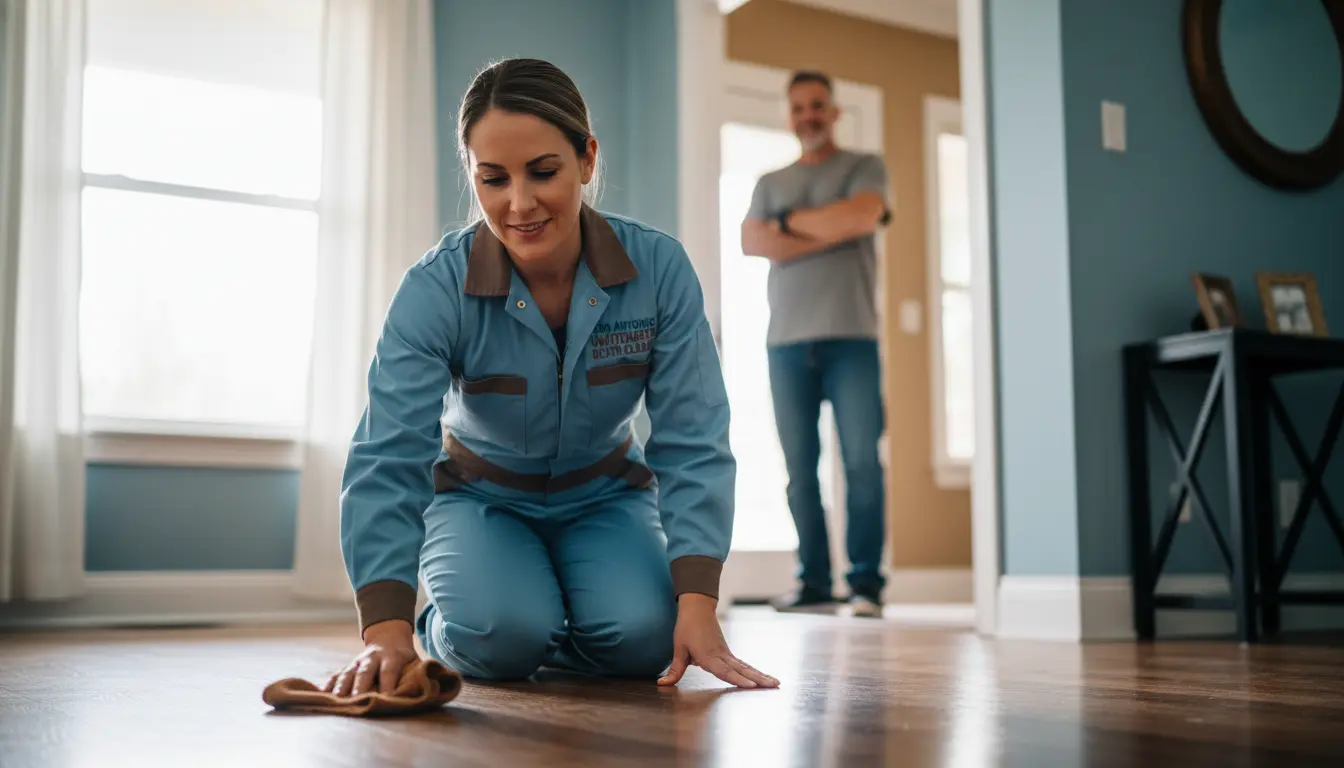
According to a 2026 study published in the Journal of Forensic Sciences, a body can release over 200 distinct volatile organic compounds within the first 48 hours of decomposition, with the rate accelerating significantly in ambient temperatures above 80°F. In San Antonio, where summer temperatures routinely exceed 95°F and humidity levels hover around 70%, this biological activity can begin within hours, not days. The resulting biohazardous material—including blood, bodily fluids, and tissue—penetrates porous surfaces like wood flooring, drywall, and carpet padding, requiring specialized remediation that goes far beyond standard cleaning. Understanding what factors affect unattended death cleanup costs in San Antonio is essential for property owners, family members, and real estate professionals who must navigate both the emotional and financial complexities of restoring a home or business after a traumatic event.
The price of professional remediation depends on a constellation of variables, from the square footage of the affected area to the depth of biological saturation and the specific materials involved. In a city like San Antonio, with its mix of historic homes in neighborhoods like Alamo Heights and newer builds in the Alamo Ranch area, structural differences can dramatically alter the scope of work. Without knowledge of these cost drivers, families risk either overpaying for unnecessary services or underinvesting in cleanup that leaves behind dangerous pathogens, lingering odors, and potential health liabilities. This article breaks down the key factors that determine pricing, providing a transparent, technical look at what goes into a proper unattended death cleanup in San Antonio.
The Core Variables That Shape Cleanup Costs
When a death goes undiscovered for days or weeks, the scene becomes what professionals call a Level 3 or Level 4 biohazard environment, depending on the degree of decomposition and contamination. The first major factor influencing cost is the total surface area and volume of the affected space. A single room may require remediation of the subfloor, wall cavities, and ceiling, especially if biological fluids have migrated through baseboards or seeped into HVAC systems. In San Antonio, where many homes feature concrete slab foundations, fluids often pool on the surface but can wick into carpet padding and underlayment, requiring removal and replacement of those materials.
Another critical variable is the length of time between death and discovery. Decomposition progresses through distinct stages—initial autolysis, putrefaction, and eventually skeletonization—each producing different types of biohazardous material. A body discovered after one week in a home in Leon Valley during July will have advanced much further than one found after two days in October. The longer the interval, the more extensive the microbial growth, the stronger the odor, and the greater the need for structural decontamination. This directly correlates to labor hours, equipment usage, and disposal fees, all of which contribute to the final estimate.
Structural Materials and Remediation Complexity
Different building materials absorb and retain biological contaminants at different rates. Porous materials like untreated wood, drywall, carpet, and upholstery act like sponges, drawing in fluids and the bacteria they carry. In contrast, non-porous surfaces like tile, glass, and metal can often be disinfected and retained. The distinction matters because replacing porous materials—especially if they are structural (e.g., load-bearing wooden beams or subflooring)—adds significant cost. In older San Antonio neighborhoods like King William or Monte Vista, homes may have original hardwood floors, lath and plaster walls, or vintage cabinetry that require careful assessment. A professional remediation team must evaluate each surface using moisture meters, adenosine triphosphate (ATP) testing, and visual inspection to determine what can be salvaged versus what must be removed and replaced.
Subfloor remediation is one of the most expensive components of an unattended death cleanup. When biological fluids soak through carpet and padding into a plywood or oriented strand board (OSB) subfloor, the material becomes saturated and cannot be adequately cleaned. The only safe option is to cut out and remove the contaminated sections, then install new subflooring. In San Antonio, where many homes have pier-and-beam foundations, access to the subfloor area may be easier, but the removal process still requires careful containment to prevent cross-contamination. This type of structural work can add thousands of dollars to the total cost, depending on the extent of the damage and the size of the area involved.
The Role of Odor Migration and HVAC Contamination
One of the most underestimated factors affecting unattended death cleanup costs in San Antonio is odor migration. As decomposition gases permeate a space, they can travel through wall cavities, electrical outlets, and ductwork, settling in areas far from the original incident. The signature smell of decomposition—a combination of putrescine, cadaverine, and sulfur compounds—isn’t just unpleasant; it’s a sign that volatile organic compounds have saturated the environment. Professional remediation often involves setting up negative air pressure systems with HEPA filtration to prevent these particles from spreading during cleanup, a process that requires industrial-grade equipment and skilled technicians.
If the HVAC system has been contaminated, the scope of work expands to include duct cleaning, coil sanitization, and possibly replacement of air handlers or filters. In San Antonio, where air conditioning runs almost year-round, ductwork can quickly spread bioaerosols throughout a home or commercial building. A single contamination event can render an entire ventilation system a biohazard, requiring specialized cleaning using EPA-registered disinfectants and antimicrobial treatments. This added layer of remediation can increase costs by 20-40%, depending on the size of the system and the extent of contamination.
Biohazard Waste Disposal and Regulatory Compliance
All biological waste from an unattended death scene must be handled, packaged, and disposed of in accordance with federal, state, and local regulations. In Texas, the Texas Commission on Environmental Quality (TCEQ) governs the disposal of medical and biohazardous waste, requiring that materials be incinerated or treated at authorized facilities. The cost of disposal is calculated by weight—typically per pound—and includes specialized red biohazard bags, sharps containers, and secure transport. A single unattended death scene can generate hundreds of pounds of waste, including saturated carpet, padding, drywall, personal protective equipment (PPE), and cleaning materials.
Beyond disposal, there are fees for transportation and documentation. Licensed waste haulers must maintain chain-of-custody records, and each load must be accompanied by a waste manifest that tracks its journey from the site to the incinerator. In San Antonio, disposal facilities may be located outside city limits, adding mileage and time to the process. These regulatory costs are non-negotiable—they are a legal requirement, not an optional service—and they form a significant part of the overall price tag for professional cleanup.
Comparing Professional Biohazard Remediation and Standard Cleaning
| Feature/Metric | Professional Biohazard Remediation | Standard Residential Cleaning |
|---|---|---|
| Regulatory Compliance | Follows OSHA 29 CFR 1910.1030, EPA disinfection standards, TCEQ waste disposal laws | Not regulated for biohazards; no legal framework for pathogen handling |
| Pathogen Elimination | Uses EPA-registered hospital-grade disinfectants; ATP testing to verify microbial reduction | Relies on household cleaners; doesn’t eliminate bloodborne pathogens like HIV, HBV, or MRSA |
| Structural Assessment | Moisture meters, thermal imaging, and visual inspection to identify hidden contamination | No specialized equipment; contaminated materials may be overlooked |
| Odor Removal | Negative air machines, ozone treatment, thermal fogging, and hydroxyl generators | Air fresheners or deodorizers only mask odors; cannot remove volatile organic compounds |
| Waste Disposal | Licensed transport to approved incineration facilities; full chain-of-custody documentation | General trash pickup; illegal and dangerous disposal of biohazardous materials |
| Liability Protection | Insurance coverage for remediation errors; protects property owner from future claims | No liability coverage; homeowner assumes all risk for disease transmission |
Pricing Structures: What You Can Expect to Pay
- Site mobilization fees: Most professional remediation companies charge a base fee to arrive at the location, assess the scene, and set up containment equipment. In San Antonio, this ranges from $150 to $500 depending on the distance from the company’s base and the time of day. Emergency after-hours calls typically carry a premium.
- Hourly remediation rates: Labor is billed by the hour, with rates varying from $150 to $300 per technician. A typical scene requires two to four technicians working for two to four hours on a small area, but a large-scale cleanup involving multiple rooms and structural repairs can take one to three days. Total labor costs often fall between $800 and $3,500.
- Specialized disposal fees: Biohazardous waste disposal ranges from $1.50 to $3.00 per pound. A moderate cleanup generating 150 pounds of waste adds $225 to $450. For scenes with extensive decomposition or large carpeted areas, disposal fees can exceed $1,000.
Three factors consistently drive the most variation in pricing: the total volume of biohazardous waste, the extent of structural material replacement required, and the necessity for specialized HVAC decontamination. Each of these is directly tied to the duration of the undiscovered death and the porosity of the materials involved.
Safety Standards and Certifications That Protect You
Professional unattended death cleanup must adhere to the OSHA Bloodborne Pathogens Standard (29 CFR 1910.1030), which mandates that all workers handling potentially infectious materials receive annual training, be offered Hepatitis B vaccinations, and use appropriate PPE. In practice, this means technicians wear Tyvek suits, nitrile gloves, face shields, and respirators with P100 filters. They also follow strict protocols for doffing (removing) PPE to avoid self-contamination. Without these safeguards, the risk of exposure to HIV, Hepatitis B and C, and other bloodborne pathogens is unacceptably high.
The IICRC S540 standard for trauma and crime scene cleanup goes further, specifying cleaning methodologies, disinfection dwell times, and verification testing. ATP testing, which measures the presence of adenosine triphosphate (a molecule found in all living cells) on a surface, provides a quantitative benchmark for cleanliness. A reading below 10 relative light units (RLUs) indicates successful decontamination, while higher readings require additional treatment. This scientific approach ensures that every surface is not just visually clean but biologically safe. In San Antonio, a professional company with IICRC certification and OSHA compliance offers property owners a documented guarantee of safety—something a general cleaning service simply cannot provide.
Expert Insights: Advanced Diagnostic Tips
Experienced remediation specialists look beyond the obvious. One diagnostic technique involves using a thermal imaging camera to detect temperature variations behind walls. Biological fluids that have seeped into insulation or wood create thermal anomalies because moisture retains heat differently than dry materials. This allows technicians to pinpoint areas of hidden contamination without tearing into walls unnecessarily. Another method is the use of a canine scent detection team, which can locate decomposition odors even after visible cleanup has been completed. While this service adds cost, it is invaluable for ensuring that no residual contamination remains.
A common mistake property owners make is attempting to clean porous materials themselves. Household bleach, for example, is ineffective against bloodborne pathogens on wood or drywall because it cannot penetrate the surface pores. It also breaks down quickly in the presence of organic matter, neutralizing before it can disinfect. Another error is waiting for odors to dissipate naturally. Decomposition gases do not simply vanish; they adsorb into porous materials and can re-emit over months or years, especially in humid environments like San Antonio. Finally, allowing untrained family members or friends into the scene is dangerous. Even brief exposure to aerosolized pathogens can lead to respiratory infections or long-term health issues. Professional containment, removal, and verification are the only safe pathways to full restoration.
Frequently Asked Questions About Unattended Death Cleanup Costs
Does homeowner’s insurance cover unattended death cleanup in San Antonio?
Coverage depends on the specific policy and the circumstances of the death. Many standard homeowner’s policies include coverage for the removal of biological materials as part of property damage or liability provisions, especially if the death resulted from a covered peril. However, some policies explicitly exclude biohazard cleanup. It is essential to review your policy language—specifically looking for terms like “pollutant cleanup” or “biohazard removal”—and to contact your insurance adjuster as soon as the scene is discovered. Professional remediation companies can often provide documentation to support your claim, including photographs, waste manifests, and ATP test results.
How quickly should cleanup begin after an unattended death is discovered?
Cleanup should begin within 24 to 48 hours of discovery to minimize further structural damage, halt odor migration, and reduce the risk of pathogen exposure. Every hour of delay allows biological fluids to penetrate deeper into porous materials, and decomposition gases to spread through the building. In San Antonio’s heat, this timeline is even more compressed. Professional companies typically offer emergency response services, arriving within a few hours of the initial call to begin containment and removal.
What happens if I try to clean the scene myself?
Attempting DIY cleanup of an unattended death scene is extremely dangerous and often illegal. Without proper PPE, training, and disposal methods, you risk contracting bloodborne diseases like Hepatitis B or C. Additionally, household cleaning products cannot achieve the level of disinfection required by law. Improper disposal of biohazardous waste—such as placing it in standard trash—violates TCEQ regulations and can result in fines of up to $10,000 per incident. Finally, incomplete remediation often leads to ongoing odor problems and potential health liabilities for future occupants, which can affect property value and resale.
Can unattended death cleanup costs be negotiated?
Reputable companies base their pricing on the actual scope of work required, which is determined by a thorough on-site assessment. While there is typically some flexibility in scheduling discounts or package rates for large properties, costs are driven by labor hours, material replacement, and disposal fees that are largely fixed. A company that offers dramatically lower prices may be cutting corners—using unlicensed waste disposal, skipping ATP testing, or failing to wear proper PPE. These shortcuts increase your legal and health risks. It is better to pay for a thorough, certified cleanup than to face future liability or remediation failures.
Professional Biohazard Remediation in San Antonio
Understanding what factors affect unattended death cleanup costs in San Antonio empowers you to make informed decisions during a difficult time. From the square footage of contamination and porosity of structural materials to the duration of decomposition and regulatory waste disposal requirements, each variable plays a role in the final estimate. Professional remediation is not an expense to minimize—it is an investment in health, safety, and property value. By choosing a company that adheres to IICRC S540 standards, OSHA regulations, and TCEQ waste disposal laws, you ensure that the site is restored to a safe, livable condition.
San Antonio Unattended death cleanup offers certified, compassionate, and technically rigorous services across the greater San Antonio area, from Boerne to Schertz and from Alamo Heights to Windcrest. Our team uses advanced diagnostic tools, hospital-grade disinfectants, and thorough verification protocols to eliminate every trace of biohazardous material. We handle every step—from initial containment to final ATP testing—so you can focus on what matters most. Contact us today for a confidential assessment and a transparent, detailed estimate. We are here to help you restore safety and peace of mind.