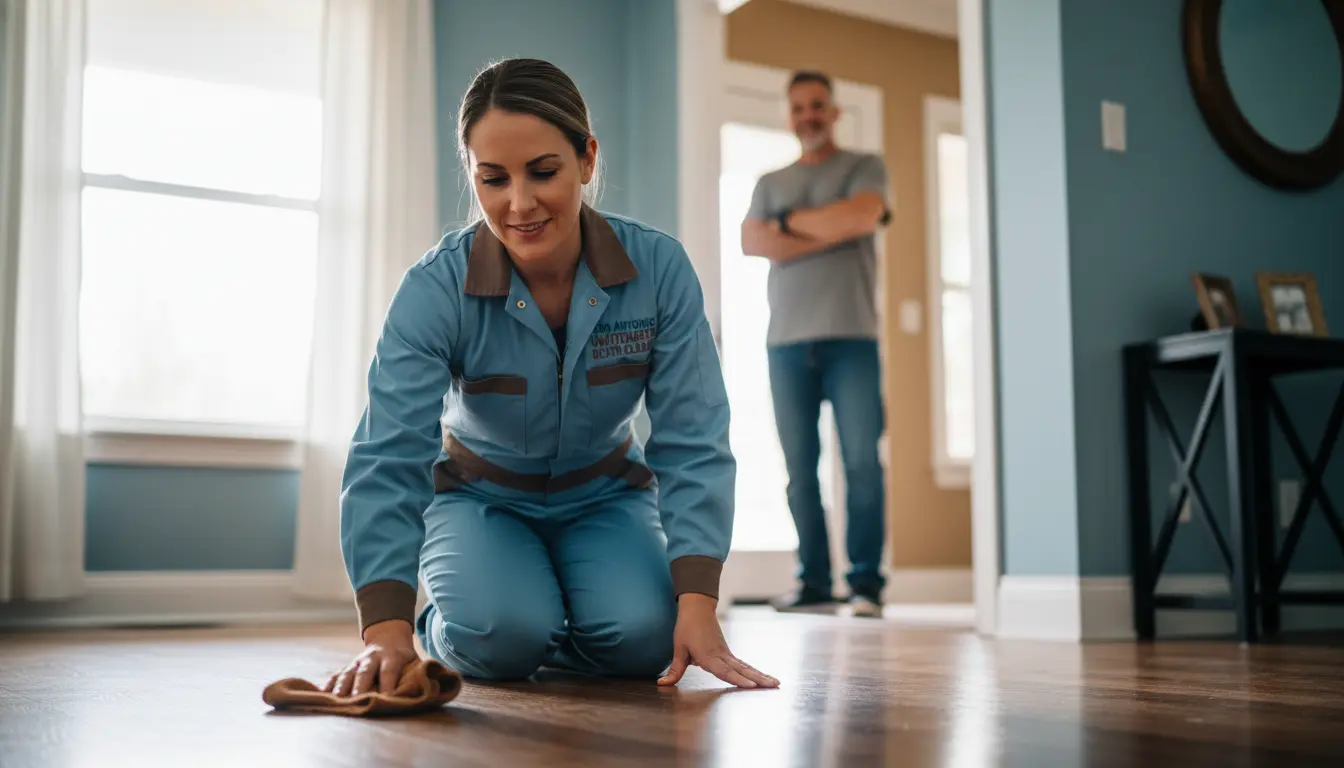
The answer is not a simple cleaning tip or a bottle of enzyme spray. Odor removal after an unattended death in a residence requires a systematic, science-based approach that addresses the source of the biological contamination, not just the airborne scent. In San Antonio, where the climate accelerates decomposition and drives fluids deep into structural materials, the remediation process must follow the IICRC S540 standard for trauma and crime scene cleanup. Anything less is a risk to the property, the occupants, and the first responders who may have to re-enter the space later. This article walks through the exact workflow that professional biohazard remediation specialists use to eliminate decomposition odors permanently, including the equipment, the chemistry, and the local considerations that make San Antonio a uniquely challenging environment for this work.
Whether you are a property owner in Leon Valley, a real estate agent in Boerne, or a family member dealing with an unattended death in a San Antonio residence, understanding the full scope of odor removal is critical. It is not a job for a general cleaning service or a well-intentioned relative. It is a job for certified technicians who understand bloodborne pathogens, microbial remediation, and structural decontamination. The process is detailed, it is regulated, and it is the only way to return a home to a safe and habitable condition. We cover every step below.
The Technical Process for Decomposition Odor Elimination
Professional odor removal after an unattended death in a residence begins before a single cleaning agent is applied. The first step is a thorough risk assessment and site evaluation. Technicians arrive in full personal protective equipment, including Tyvek suits, N100 respirators, nitrile gloves, and boot covers. They establish a containment zone using polyethylene sheeting and zipper entries to prevent cross-contamination to the rest of the property. Negative air machines with HEPA filtration are placed in the affected room to create negative pressure, pulling airborne particles into the filtration system and preventing odors from migrating through the HVAC system to other parts of the home. This step is non-negotiable in a San Antonio residence, where central air conditioning systems can spread biological aerosols throughout the entire structure within minutes.
Once containment is established, the physical removal of biohazardous materials begins. This includes blood, bodily fluids, and any saturated soft goods such as mattresses, bedding, clothing, and upholstered furniture. In advanced decomposition cases, fluids have often soaked through carpet and padding into the subfloor. In older San Antonio homes, especially those in historic districts like King William or Monte Vista, the subfloor may be pine or plywood that has been repeatedly stained and weakened by biological seepage. These materials are cut out and removed, packaged in regulated biohazard waste bags, and transported to a licensed medical waste incinerator. This is not a step that can be skipped. Any attempt to clean a saturated subfloor with household products will leave behind organic material that will continue to decompose and produce odor for months or years.
The final phase of odor removal involves ozone treatment or hydroxyl generation. Ozone generators are used in a vacant, sealed room to oxidize odor molecules that may still be trapped in porous surfaces like wood, concrete, or tile grout. Hydroxyl generators are a safer alternative for occupied spaces, using UV light to create hydroxyl radicals that neutralize odors without damaging materials. In San Antonio, where the heat can cause lingering odors to bake into surfaces, this step is often repeated two or three times over the course of several days to ensure complete elimination. The entire process, from initial assessment to final clearance, typically takes three to five days for a single room, depending on the extent of the contamination. For a full overview of the recovery timeline and what to expect, refer to the ultimate guide to unattended death scene recovery.
Expert Insights for Odor Removal After an Unattended Death
After more than a decade of performing unattended death cleanup in San Antonio, our team has developed a set of diagnostic insights that go beyond the standard remediation protocol. These are the observations that separate a thorough job from a superficial one, and they are often the difference between a home that smells clean and one that still carries an underlying odor months later.
The first insight is that odor migrates through pathways that are not immediately visible. Biological fluids, after pooling on a surface, will wick into the seams between floorboards, into the gaps behind baseboards, and down into the crawlspace or slab. In San Antonio, many homes have slab-on-grade foundations with hairline cracks. Those cracks become channels for fluid migration, and the odor will emerge in a completely different room than where the death occurred. Technicians must use moisture meters and thermal imaging cameras to detect these hidden reservoirs. Simply cleaning the visible stain is not enough. The fluid must be traced to its full extent, and all affected materials must be removed or treated.
The second insight is that porous materials are not salvageable in advanced decomposition cases. Carpet, padding, drywall, insulation, and unsealed wood all absorb biological fluids and the associated odor compounds. Even after aggressive cleaning and treatment, these materials will continue to release odor as they degrade over time. The standard of care in the industry is to remove and replace all porous materials within a radius of several feet beyond the visible contamination. In practice, this often means removing carpet and padding from an entire room, cutting out drywall to a height of four to five feet, and replacing any insulation that was exposed to fluid or aerosolized odor. Attempting to save these materials is a false economy, and it almost always results in a callback for residual odor.
Common mistakes that property owners make include using household bleach on biological matter. Bleach is not a cleaner. It is an oxidizer that can react with organic material to create toxic fumes, and it does not penetrate porous surfaces. Another mistake is waiting for the odor to dissipate naturally. In San Antonio’s climate, the odor will not go away. It will intensify as the biological material continues to decompose in the heat. A third mistake is allowing untrained personnel, such as well-meaning neighbors or general contractors, into the site. These individuals are not protected by proper PPE and are at risk of exposure to bloodborne pathogens, including hepatitis B, hepatitis C, and HIV. The legal liability for a property owner who allows this exposure is significant. For a detailed discussion of these risks, see the risks of ignoring unattended death cleanup fast.
Pricing Factors for Professional Odor Removal
The cost of odor removal after an unattended death in a residence varies based on several factors, but transparency is essential. Professional biohazard remediation companies typically structure pricing around the scope of work rather than a flat rate, because no two scenes are identical. In San Antonio, the following pricing structures are common:
- Site mobilization fees: A standard fee to cover the deployment of trained technicians, equipment, and containment supplies to the property. This typically ranges from $300 to $600 depending on the distance from the service base and the time of day.
- Hourly remediation rates: Most companies charge an hourly rate for on-site labor, which includes assessment, physical removal, chemical treatment, and final testing. Rates in San Antonio range from $150 to $250 per hour per technician. A typical single-room scene may require 8 to 16 hours of labor.
- Specialized disposal fees: Biohazard waste must be transported and incinerated at a licensed facility. Disposal costs are calculated by weight and volume, typically $50 to $150 per waste drum. A moderate scene may generate two to four drums.
Safety Standards and Regulatory Compliance
Safety is the foundation of every professional biohazard remediation project. In San Antonio, as in the rest of the United States, the Occupational Safety and Health Administration (OSHA) sets the standard for worker protection through the Bloodborne Pathogens Standard, 29 CFR 1910.1030. This regulation requires employers to provide training, PPE, and vaccination programs for any employee who may be exposed to blood or other potentially infectious materials. Our technicians complete annual refresher training on this standard and carry documentation of their certification on every job site.
The Environmental Protection Agency (EPA) regulates the disinfectants and antimicrobial products used in remediation. All chemicals applied to a scene must be registered with the EPA and used according to the label directions. This is not a suggestion. It is a legal requirement, and it ensures that the products are effective against the specific pathogens present in decomposition fluid. The EPA also governs the disposal of biohazard waste, which must be transported by a licensed medical waste hauler to an approved treatment facility. In Bexar County, this means using a registered transporter who follows the Texas Commission on Environmental Quality (TCEQ) guidelines for infectious waste.
The Institute of Inspection, Cleaning and Restoration Certification (IICRC) publishes the S540 standard for trauma and crime scene cleanup, which is the industry benchmark for best practices. This standard covers everything from the initial site assessment and containment protocols to the final clearance testing and documentation. Companies that adhere to IICRC S540 provide a level of rigor that protects property owners and future occupants from communicable diseases. Non-compliance, on the other hand, exposes everyone involved to serious health risks, including hepatitis, tuberculosis, and bacterial infections. For a full breakdown of the steps involved in professional cleanup, read our article on 7 essential steps for professional death cleanup help.
Frequently Asked Questions About Unattended Death Odor Removal
Can decomposition odor be completely removed from a home?
Yes, but only if the source of the odor is removed. Decomposition odor is caused by volatile organic compounds (VOCs) released as organic matter breaks down. These VOCs bind to porous materials like drywall, wood, and fabric. If the contaminated materials are removed and the remaining surfaces are treated with the correct chemical agents and sealants, the odor can be eliminated permanently. The key is that surface cleaning alone will not work. The source must be physically removed or encapsulated. In San Antonio, where the heat accelerates the bonding of VOCs to materials, this is especially true. A professional company will use ATP testing to confirm that the biological residue is gone before sealing the area.
How long does professional odor removal take after an unattended death?
The timeline depends on the size of the affected area and the stage of decomposition. For a single room with moderate contamination, the process typically takes three to five days. This includes one day for assessment and containment, one to two days for physical removal of biohazardous materials, one day for chemical treatment and sealing, and one day for final testing and ozone treatment. If the entire home is affected or if the decomposition has penetrated the HVAC system, the timeline can extend to one to two weeks. Property owners should plan for the home to be uninhabitable during the remediation period, and they should arrange for alternative lodging. Our team provides a detailed schedule after the initial assessment so that expectations are clear from the start.
Is it safe to stay in the home during the remediation process?
No. The remediation process involves the use of powerful chemicals, ozone generators, and negative air machines that create a controlled environment. Ozone is a lung irritant and must not be inhaled. The containment area is sealed off, but the rest of the home may still be exposed to airborne particles during the removal phase. For the safety of all occupants, the home should be vacated until the final clearance testing is complete. In some cases, partial occupancy may be possible if the affected area is isolated and the HVAC system is turned off or disconnected, but this is rare. Our technicians will advise on the specific safety requirements for each scene, and we recommend following those guidelines without exception.
Does homeowners insurance cover unattended death cleanup and odor removal?
Many homeowner’s insurance policies cover the cost of professional biohazard remediation, including odor removal, under the liability or dwelling coverage provisions. However, coverage varies by policy and by the specific circumstances of the death. Property owners should contact their insurance agent immediately after the scene is discovered and ask about coverage for trauma scene cleanup. Some policies require the use of a certified remediation company and may have a dollar limit on biohazard cleanup. It is also important to document everything. Professional companies provide a detailed scope of work, photographs, and chain-of-custody documentation that satisfies insurance adjusters. If the policy does not cover the cost, the property owner may be responsible, but the expense is generally far lower than the long-term cost of leaving the odor untreated, which can reduce the property value by tens of thousands of dollars.
What happens if I try to clean the scene myself?
Attempting to clean an unattended death scene without proper training, equipment, and disposal methods is dangerous and illegal in most jurisdictions. The biological material contains bloodborne pathogens that can survive on surfaces for days or weeks. Using household cleaners may spread the contamination rather than remove it. Improper disposal of biohazard waste, such as placing it in household trash, violates Texas state law and can result in fines. Furthermore, the odor will return because the source has not been addressed. In our experience, homeowners who attempt self-cleanup almost always end up hiring a professional company later, and the total cost is higher because the biological material has had time to penetrate deeper into the structure. The safest and most cost-effective approach is to call a certified biohazard remediation company immediately after the scene is discovered. For a comprehensive guide, visit unattended death cleanup guide for San Antonio homes.
Professional Biohazard Remediation in San Antonio
Odor removal after an unattended death in a residence is not a job for general contractors, janitorial services, or well-meaning volunteers. It is a specialized field that requires certification, experience, and a deep understanding of the science behind decomposition, pathogen transmission, and structural decontamination. In San Antonio, where the climate compounds every challenge, the margin for error is small. A missed patch of saturated subfloor or an untreated wall cavity can lead to months of recurring odor, health complaints, and a property that is difficult to sell or rent. The only reliable way to restore a home to a safe, odor-free condition is to engage a certified biohazard remediation company that follows IICRC S540 standards and understands the local environment.