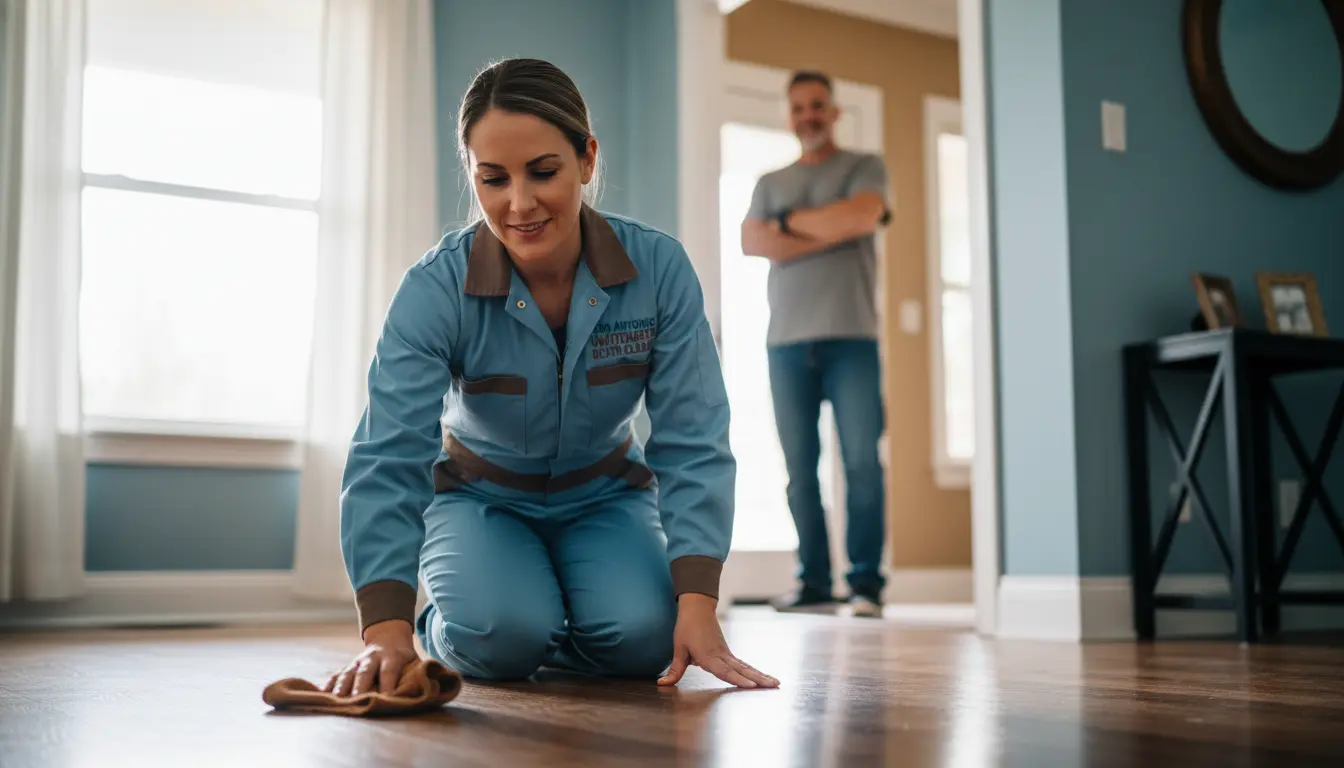
Most property owners assume that any cleaning crew with a mop, bleach, and a hazmat suit can handle an unattended death scene. That assumption is not just wrong; it is dangerous. The gap between what a standard cleaning service delivers and what forensic biohazard remediation requires is not a matter of degree but of discipline, regulation, and scientific rigor. In San Antonio, where summer temperatures routinely push past 95°F and humidity accelerates biological decomposition into a public health crisis, treating a death scene like a particularly messy spill invites long-term structural damage, legal liability, and serious health risks for everyone who enters the property afterward.
The reality is that unattended death cleanup vs standard cleaning represents a fundamental difference in methodology, certification, and outcome. Standard janitorial crews are trained to make surfaces look clean. Professional biohazard remediation specialists are trained to make surfaces safe. That safety standard involves bloodborne pathogen protocols, negative air pressure containment, adenosine triphosphate (ATP) testing to verify microbial elimination, and the complete removal of porous building materials that have absorbed biological fluids. In a city like San Antonio, where many homes date back to the 1950s with older subflooring and porous drywall, the difference between a visual clean and a structural decontamination can mean the difference between a livable home and a condemned property.
The Technical Process: Why Standard Cleaning Protocols Fail at Unattended Death Scenes
When a death goes undiscovered for days or weeks in a South Texas residence, the biological breakdown process releases enzymes, bacteria, and volatile organic compounds that migrate through drywall, wood flooring, HVAC systems, and even concrete slabs. Standard cleaning methods are designed for surface-level soil and routine pathogens. They do not account for the molecular-level contamination that occurs when human remains decompose in a warm, humid environment. The technical workflow for professional remediation starts with a completely different premise: that the entire affected zone must be treated as a biohazard containment area, not a room that needs scrubbing.
The first step is a thorough risk assessment. Our team evaluates the extent of fluid saturation, the duration of decomposition, the type of flooring and wall materials, and the proximity of the HVAC system. San Antonio’s heat index can push indoor temperatures above 90°F during summer months, which accelerates decomposition rates dramatically. A body that has been undiscovered for 72 hours in July will produce significantly more biological seepage than the same scenario in December. That seepage saturates carpet padding, seeps into plywood subflooring, and wicks up drywall. Standard cleaning cannot remove that contamination because the contaminants are no longer on the surface; they are inside the material.
Once the assessment is complete, we establish containment using negative air machines equipped with HEPA filtration. This creates a pressure differential that prevents airborne pathogens and odor particles from traveling to unaffected areas of the home. Every technician wears Level B personal protective equipment, including full-face respirators, Tyvek suits, and chemical-resistant gloves. The removal phase involves physically cutting out and disposing of contaminated carpet, padding, subflooring, drywall, and insulation. These materials are double-bagged in biohazard-rated containers and transported to an authorized medical waste incineration facility. No amount of bleach or commercial disinfectant can make porous material safe once it has been saturated with biological fluids. Replacement is the only acceptable protocol.
Data Comparison: Professional Remediation vs. Standard Janitorial Cleaning
The table below outlines the critical differences between professional biohazard remediation and standard residential cleaning. These distinctions are not theoretical; they are based on industry standards, regulatory requirements, and measurable outcomes.
| Feature/Metric | Professional Biohazard Remediation | Standard Residential Cleaning |
|---|---|---|
| Regulatory Compliance | OSHA 29 CFR 1910.1030, IICRC S540, EPA waste disposal requirements | None; no biohazard training required |
| Pathogen Elimination | Hospital-grade disinfectants + ATP verification | Household bleach or all-purpose cleaner; no verification |
| Structural Assessment | Full evaluation of porous materials, subflooring, HVAC contamination | Visual inspection only; no testing for hidden seepage |
| Containment Protocol | Negative air pressure, HEPA filtration, sealed barriers | None; open access increases cross-contamination risk |
| Waste Disposal | Biohazard-rated bags, licensed medical waste transport, incineration | Standard trash pickup; illegal and dangerous |
| Insurance & Liability | Liability coverage for biohazard incidents; workers’ compensation | General liability only; may not cover biohazard exposure claims |
Source: IICRC S540 Trauma and Crime Scene Cleanup Standard
Every metric in this table points to the same conclusion: standard cleaning services are not equipped, trained, or legally authorized to remediate an unattended death scene. Attempting to use a general cleaning crew for this work exposes property owners to fines from the Texas Commission on Environmental Quality, potential lawsuits from future occupants who contract bloodborne diseases, and voided insurance claims if the contamination is discovered later.
Expert Insights: Three Diagnostic Tips Every Property Owner Should Know
Hidden Biological Seepage Is the Rule, Not the Exception
One of the most common misconceptions is that biological fluids stay where they land. In reality, blood and other bodily fluids behave like any liquid: they follow gravity, capillary action, and the path of least resistance. In a San Antonio home with a concrete slab foundation, fluids can seep through hairline cracks and spread beneath tile or laminate flooring. In wood-frame homes, fluids wick up drywall and into wall cavities. A professional remediation team uses moisture meters, thermal imaging cameras, and borescopes to detect seepage that is invisible to the naked eye. Without this equipment, standard cleaners leave behind biological material that will continue to decompose, produce odor, and support microbial growth for months or years.
Porous Materials Require Replacement, Not Cleaning
No amount of scrubbing, chemical treatment, or enzyme application can fully remove biological contamination from porous materials. Carpet, padding, upholstery, drywall, insulation, and unsealed wood all absorb fluids into their internal structure. The IICRC S540 standard explicitly states that porous materials that have been contaminated with blood or other potentially infectious materials must be removed and replaced. Attempting to clean these materials creates a false sense of safety. The pathogens remain viable beneath the surface, where they can be reactivated by moisture or temperature changes. Property owners who opt for cleaning over replacement often face recurring odor issues, mold growth, and eventual structural degradation.
Negative Air Pressure Is Non-Negotiable for Cross-Contamination Prevention
When a remediation team enters a scene without establishing negative air pressure, they effectively turn the entire property into an aerosolization chamber. Airborne pathogens and odor molecules travel through open doorways, HVAC ducts, and even gaps around electrical outlets. Within minutes, contamination spreads to rooms that were never affected by the original incident. Professional remediation crews use negative air machines to create a vacuum within the containment zone, ensuring that all airborne particles are captured by HEPA filters before the air is exhausted outside. Standard cleaning services have no equivalent protocol. Their presence at a death scene can actually worsen the contamination profile of the property by disturbing settled pathogens and redistributing them throughout the home.
Common Mistakes Property Owners Make
The first mistake is using household bleach on biological matter. Bleach is a disinfectant, but it is not a cleaner. It does not break down organic residues; it simply denatures proteins on the surface. When bleach is applied to blood, it can actually fix the stain to the surface, making it harder to remove. More importantly, bleach does not penetrate porous materials and does not eliminate pathogens that have soaked into subflooring or drywall. Property owners who believe they have cleaned a scene with bleach are often shocked when odor returns days or weeks later.
The second mistake is waiting for odor to dissipate naturally. Odor from decomposition is caused by volatile organic compounds that continue to off-gas from contaminated materials. Waiting does not solve the problem; it only allows the contamination to spread further. In San Antonio’s heat, that odor can become embedded in HVAC systems, furniture, and even wall studs within 48 hours. Once the HVAC system is contaminated, the entire house recirculates the odor every time the system runs. Professional remediation includes HVAC duct cleaning and, in severe cases, replacement of ductwork and coils.
Pricing Structures for Professional Unattended Death Cleanup
- Standard site mobilization fee: Most professional remediation companies charge a mobilization fee that covers the cost of transporting equipment, PPE, and containment materials to the site. In San Antonio, this fee typically ranges from $250 to $500 depending on the distance from the company’s base of operations and the urgency of the response.
- Hourly remediation rates: The labor component is usually billed hourly, with rates between $150 and $300 per hour per technician. A standard unattended death scene requires a minimum of two technicians, and the total labor hours depend on the size of the affected area and the extent of contamination. A single-room scene that has been undiscovered for less than 72 hours may require 8 to 12 labor hours. A multi-room scene with extensive fluid migration can require 40 or more hours.
- Specialized disposal costs: Biohazardous waste disposal is regulated by federal and state authorities. Licensed medical waste transporters charge by the pound or by the container. Disposal costs for a typical unattended death scene range from $200 to $800. This fee covers proper packaging, transportation, and incineration at a permitted facility.
The total cost for a professional unattended death cleanup in San Antonio typically falls between $3,000 and $10,000 for a standard residential scene. Complex scenes involving multiple rooms, significant decomposition, or structural damage can exceed $15,000. While this is a significant expense, it is far less than the cost of remediating a property that has been improperly cleaned and later develops mold, odor, or structural failure.
Safety and Standards: The Regulatory Framework That Protects Property Owners
Professional biohazard remediation is governed by a specific set of standards that do not apply to standard cleaning services. The most important of these is the IICRC S540 standard, which establishes the protocols for trauma and crime scene cleanup. This standard covers everything from initial assessment and containment to waste disposal and final verification. Companies that are certified under this standard undergo regular audits and must demonstrate ongoing compliance with evolving best practices.
The Occupational Safety and Health Administration’s Bloodborne Pathogens Standard (29 CFR 1910.1030) requires employers to protect workers from exposure to blood and other potentially infectious materials. This standard mandates the use of PPE, the provision of hepatitis B vaccinations, the implementation of exposure control plans, and the proper disposal of biohazardous waste. Any company that performs unattended death cleanup without complying with this standard is operating illegally and exposing its workers — and the property owner — to significant liability.
In Texas, the Texas Commission on Environmental Quality regulates the disposal of medical waste. Biohazardous materials from a death scene must be transported by a licensed medical waste hauler and incinerated at a permitted facility. Standard trash collection services are not authorized to handle this waste, and property owners who attempt to dispose of contaminated materials through regular household waste streams can face fines and legal action.
Frequently Asked Questions About Unattended Death Cleanup
Can I clean an unattended death scene myself to save money?
Legally and practically, no. Self-cleaning an unattended death scene exposes you to bloodborne pathogens such as hepatitis B, hepatitis C, and HIV. Even with thorough cleaning, you cannot verify that all pathogens have been eliminated without ATP testing. Additionally, improper disposal of biohazardous waste is a violation of Texas state regulations and can result in fines. Most insurance policies also require that biohazard remediation be performed by a licensed professional for a claim to be valid. The short-term savings of a DIY approach are almost always outweighed by the long-term health and financial risks.
How long does professional unattended death cleanup take?
The timeline depends on the size of the affected area, the duration of decomposition, and the extent of structural material replacement required. A single-room scene with minimal contamination can often be completed in one to two days. A scene that has affected multiple rooms, the HVAC system, or structural components may require three to five days. In severe cases involving extensive decomposition and structural damage, the process can take a week or longer. The remediation company should provide a timeline after completing the initial risk assessment.
Will my homeowner’s insurance cover unattended death cleanup?
Many homeowner’s insurance policies cover biohazard remediation under their dwelling coverage or special assessments provisions. However, coverage varies widely by policy and insurer. Some policies require a specific rider for biohazard cleanup. It is essential to contact your insurance provider as soon as possible after the discovery of an unattended death. Most professional remediation companies can provide documentation and invoices that support your insurance claim. We recommend asking your insurer whether they require a specific certification or approval process before work begins.
What happens if I don’t clean an unattended death scene at all?
Leaving an unattended death scene uncleaned has severe consequences. The biological decomposition process will continue, producing odors that attract insects and vermin. Neighbors may file complaints with the city, which can result in fines or a public health citation. The property’s value will decline rapidly, and selling the property will become nearly impossible without full disclosure of the incident. In many cases, mortgage lenders and title companies require evidence of professional remediation before they will approve a sale or refinance. The longer the scene remains uncleaned, the more extensive and expensive the eventual remediation will be.
Is it safe to stay in the home while remediation is happening?
No. The remediation process involves the removal of contaminated materials, the use of chemical disinfectants, and the operation of negative air machines that create significant noise and air movement. More importantly, the containment zone is an active biohazard area. Occupants should not be present in the home during remediation. Most remediation companies recommend that property owners arrange for alternative accommodations until the work is complete and final air quality testing confirms that the site is safe for reoccupancy.
Professional Biohazard Remediation in San Antonio
The difference between unattended death cleanup vs standard cleaning is not a matter of semantics. It is a matter of science, safety, and legal compliance. Standard cleaning services are designed to make a space look tidy. Professional biohazard remediation is designed to make a space biologically safe. The distinction becomes critical in San Antonio, where heat and humidity accelerate decomposition, and where older homes require careful structural assessment to prevent long-term damage. Every property owner who faces this situation deserves a remediation team that understands the local climate, the regulatory environment, and the emotional weight of the task.
At San Antonio Unattended death cleanup, we bring decades of combined experience, IICRC S540 certification, and a compassionate approach to every scene we remediate. Our team of technicians is trained in the latest forensic restoration techniques, and we work closely with property owners, insurance adjusters, and local authorities to ensure that every job is completed thoroughly, discreetly, and in full compliance with all applicable standards. If you are facing an unattended death scene in San Antonio or the surrounding areas, contact us today. We will assess the situation, provide a transparent estimate, and restore your property to a safe and livable condition.