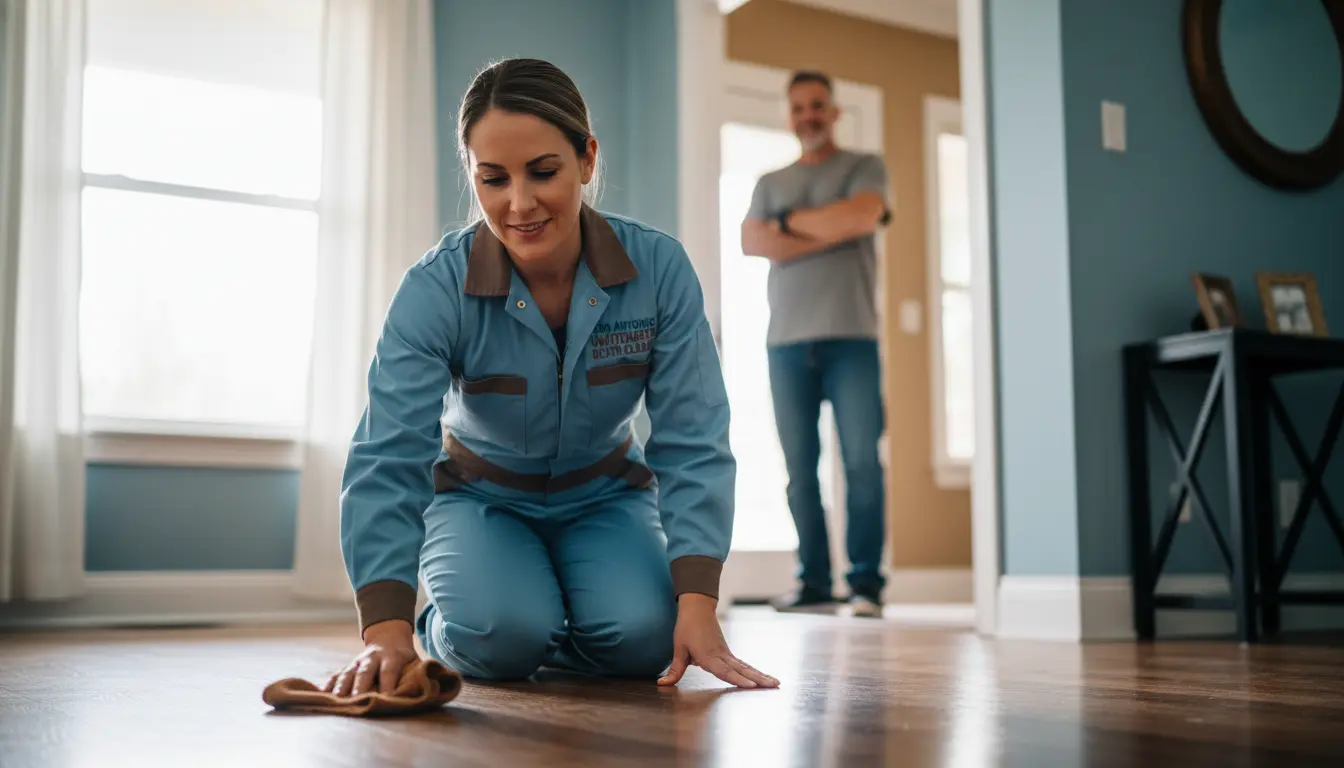
Unattended death cleanup is the professional biohazard remediation process applied when a death occurs and remains undiscovered for hours, days, or weeks. Unlike standard janitorial cleaning, which assumes a surface is only dirty, unattended death cleanup requires treating blood, bodily fluids, and decomposing tissue as regulated medical waste under OSHA and EPA guidelines. The process involves far more than wiping surfaces; it demands specialized equipment, certified protocols, and a deep understanding of pathogen transmission risks.
In San Antonio, the combination of high ambient heat and humidity along the I-35 corridor accelerates biological decomposition, making rapid and thorough remediation critical. A death that goes unnoticed for even 48 hours in a South Texas summer can cause structural damage, persistent odors, and biohazard contamination that penetrates porous materials like drywall, flooring, and subflooring. This is why property owners, landlords, and family members must understand what constitutes proper unattended death cleanup and how pricing is structured for 2026.
This guide provides a transparent breakdown of costs, the technical steps involved, and the regulatory standards that govern every phase of the work. Whether you are managing a property in Alamo Heights, Helotes, or downtown San Antonio, knowing what to expect helps you make informed decisions during a difficult time.
What Defines a Professional Unattended Death Cleanup in San Antonio
A professional unattended death cleanup begins with a site assessment by a certified biohazard remediation specialist. The specialist evaluates the extent of contamination, the type of surfaces affected, and the level of odor migration. This initial inspection determines whether the job can be handled with surface cleaning or if structural components must be removed and replaced.
Unlike a standard cleaning crew, a biohazard remediation team follows the IICRC S540 Standard for Trauma and Crime Scene Cleanup. This standard mandates the use of personal protective equipment (PPE) such as Tyvek suits, N95 respirators, and chemical-resistant gloves. It also requires negative air pressure machines to prevent airborne contaminants from spreading to adjacent rooms. In San Antonio, where many homes have central HVAC systems, cross-contamination prevention becomes especially important because biological particles can travel through ductwork and settle in unexpected areas.
The process also includes adenosine triphosphate (ATP) testing after cleaning. ATP testing measures the presence of organic material on surfaces using a bioluminescence reaction. A result below a specific threshold confirms that the area is biologically clean. Without this step, there is no way to verify that pathogens have been eliminated, leaving future occupants at risk.
Technical Process: Step-by-Step Remediation Workflow
Each unattended death cleanup follows a structured workflow designed to ensure safety, compliance, and thoroughness. The steps below outline what happens from the moment a team arrives on site.
Initial Risk Assessment and Site Containment
Upon arrival, the lead technician conducts a walkthrough to identify all contaminated areas. This includes visible biological matter, saturation into flooring, and odor penetration into walls or furniture. The team then establishes containment zones using polyethylene sheeting and negative air machines. This creates a controlled environment where airborne pathogens cannot escape into clean areas of the property.
For properties in older San Antonio neighborhoods like Monte Vista or King William, the assessment often reveals hidden seepage behind walls or under hardwood floors. The high humidity can cause biological fluids to wick into porous materials faster than in drier climates, so technicians must inspect for subfloor damage and potential mold growth that may have already started.
PPE Protocol Initiation and Biohazard Removal
All team members don full PPE before entering the containment area. This includes fluid-resistant coveralls, face shields, double-gloving, and boot covers. Once suited, they begin physical removal of all biohazardous materials. This involves soaking up blood and fluids with absorbent pads, scraping away tissue, and carefully bagging everything in red biohazard waste bags.
Any items that cannot be effectively cleaned—such as mattresses, carpets, upholstered furniture, or heavily saturated drywall—are removed and disposed of as regulated medical waste. In Bexar County, this waste must be transported by a licensed medical waste hauler and incinerated at an approved facility. The cost of this disposal is a significant factor in overall pricing.
EPA-Registered Chemical Sanitization and Enzyme Treatment
After gross removal, the team applies hospital-grade disinfectants that are EPA-registered for bloodborne pathogens. These chemicals are left to dwell for the manufacturer-specified contact time to ensure viral inactivation. For porous surfaces, enzyme treatments break down organic matter at a molecular level, eliminating odors and preventing microbial growth.
San Antonio’s warm climate means that decomposition fluids can dry and crust, making them more difficult to remove. Enzyme treatments are particularly effective here because they rehydrate and digest the proteins left behind. The team may also use thermal fogging to reach hidden areas like crawl spaces or attic vents where odor molecules have settled.
ATP Fluorescence Testing and Final Structural Encapsulation
Once cleaning is complete, the technician uses an ATP luminometer to swab surfaces and measure residual organic material. A reading of 10 relative light units (RLU) or lower is generally considered clean. If any area fails, it is re-cleaned and tested again. This objective verification is what separates professional remediation from a simple scrub-down.
Final encapsulation involves sealing any remaining exposed surfaces with a specialized antimicrobial coating. This step is crucial in San Antonio properties where high humidity can reactivate dormant bacteria if moisture levels rise. The coating creates a barrier that resists future microbial growth and helps restore the structural integrity of the area.
Data Comparison: Professional Remediation vs. Standard Cleaning
| Feature/Metric | Professional Biohazard Remediation | Standard Residential Cleaning |
|---|---|---|
| Regulatory Compliance | Follows OSHA 29 CFR 1910.1030, IICRC S540, EPA disposal rules | No regulatory oversight; general cleaning chemicals only |
| Pathogen Elimination | EPA-registered disinfectants with verified contact time; ATP testing for validation | Household bleach or all-purpose cleaners; no testing |
| Structural Assessment | Identifies hidden seepage, subfloor damage, HVAC contamination | Visual cleaning only; no inspection for biological penetration |
| Odor Removal | Enzyme treatments, thermal fogging, ozone or hydroxyl machines | Air fresheners or deodorizers; temporary masking |
| Waste Disposal | Licensed medical waste transport and incineration | Dumpster disposal (illegal for biohazard waste) |
| Insurance Documentation | Detailed reports, photos, ATP results for claims | None |
Source: IICRC S540 Trauma and Crime Scene Cleanup Standard
Expert Insights: Diagnostic Tips for Property Owners
Understanding the nuances of unattended death cleanup can help property owners avoid costly mistakes. Below are three advanced diagnostic tips that experienced remediators rely on.
Detecting Hidden Biological Seepage
Biological fluids can travel along floor joists and behind baseboards without leaving visible stains on the surface. In San Antonio’s older homes with wooden subfloors, seepage may extend several feet beyond the immediate death site. Technicians use moisture meters and thermal imaging cameras to detect this hidden contamination. If left untreated, the organic material will decompose further, attracting insects and creating persistent odors that require more extensive structural removal later.
Why Porous Materials Require Replacement Rather Than Cleaning
Even the most powerful disinfectants cannot fully penetrate porous materials like unsealed concrete, drywall, or wood. When blood or bodily fluids soak into these surfaces, the pathogens become trapped in microscopic pores. Cleaning may reduce surface contamination, but it cannot eliminate the risk of future microbial growth. In practice, any porous material that has been saturated more than a quarter-inch deep must be cut out and replaced. Trying to save a section of drywall often leads to recurring odor and potential health hazards for future occupants.
The Importance of Negative Pressure to Prevent Cross-Contamination
Negative air pressure is not optional—it is a required containment strategy. Without it, airborne particles from the affected area can drift into hallways, air ducts, and adjacent rooms. In San Antonio, where many homes have central air conditioning, a single contaminated room can compromise the entire HVAC system. Professional teams set up negative air machines with HEPA filtration to create a pressure differential that pulls air into the containment zone and exhausts it safely outside. This prevents pathogens from spreading and protects the rest of the property.
Common Mistakes Property Owners Make
Even well-intentioned property owners can make errors that increase risk and cost. Avoiding these mistakes can save thousands of dollars and prevent long-term liability.
Using Household Bleach on Biological Matter
Bleach is often seen as a universal disinfectant, but it is not effective on porous surfaces and can actually fix proteins to surfaces, making them harder to remove. More importantly, bleach does not penetrate organic material; it only kills surface-level bacteria. For unattended death cleanup, EPA-registered hospital-grade disinfectants with broad-spectrum pathogen claims are required. Using bleach gives a false sense of security while leaving dangerous pathogens intact.
Waiting for Odor to Dissipate Naturally
Some property owners believe that opening windows and running fans will eliminate the smell. In reality, the odor is caused by volatile organic compounds (VOCs) released during decomposition. These compounds can linger for months and often indicate ongoing microbial activity. By the time the odor becomes noticeable, contamination has already spread to walls, carpets, and HVAC systems. Delaying professional remediation allows the problem to worsen, increasing the scope of work and the final cost.
Allowing Untrained Personnel into the Site
Friends, family members, or even general contractors who enter a contaminated area without proper PPE risk exposure to bloodborne pathogens such as hepatitis B, hepatitis C, and HIV. They may also track biological material to other parts of the property. In San Antonio, any exposure incident must be reported and can lead to legal liability for the property owner. Only trained professionals with OSHA-compliant protocols should enter the affected area.
Pricing for Unattended Death Cleanup in San Antonio
Pricing for unattended death cleanup varies based on several factors, but understanding the typical components helps property owners budget accurately. Below are the common pricing structures used by professional remediation companies in San Antonio.
- Site mobilization fee: A flat fee that covers the cost of dispatch, equipment setup, and containment. This typically ranges from $250 to $500 depending on distance and urgency. For properties in outlying areas like Boerne or Schertz, mobilization may be higher due to travel time.
- Hourly remediation rate: Most companies charge an hourly rate for labor, typically between $150 and $300 per technician per hour. A standard unattended death cleanup requires a minimum of two technicians, and the job can take anywhere from 4 to 12 hours depending on the level of decomposition.
- Specialized disposal of biohazardous materials: Disposal fees are separate and based on weight. Red bag waste disposal costs around $1.50 to $3.00 per pound. A moderate cleanup may generate 50 to 150 pounds of waste, adding $75 to $450 to the total.
- Structural material replacement: If drywall, flooring, or subflooring must be removed, the cost includes materials and labor for replacement. This can range from $500 to $3,000 or more depending on the square footage and type of material.
- HVAC decontamination: If odors or contaminants have entered the ductwork, additional cleaning is required. This service typically costs $500 to $1,500 and involves duct scrubbing, antimicrobial fogging, and filter replacement.
Several factors influence the final price. The extent of structural material replacement is the largest cost driver; a death that has gone undiscovered for weeks in a hot San Antonio home can require removing multiple rooms of drywall and flooring. The total volume of biohazardous waste also matters because disposal fees add up quickly. Finally, the necessity for specialized HVAC decontamination can double the cost if the HVAC system has been compromised. For a typical unattended death cleanup in San Antonio, total costs range from $2,500 to $8,000, with extreme cases exceeding $15,000.
Safety Standards and Regulatory Compliance
Every unattended death cleanup must comply with federal, state, and local regulations. The Occupational Safety and Health Administration (OSHA) Bloodborne Pathogens Standard 29 CFR 1910.1030 sets the requirements for protecting workers from exposure to infectious materials. This standard mandates the use of PPE, proper waste handling, and exposure control plans. Professional remediation companies train all technicians annually on these protocols.
The Environmental Protection Agency (EPA) governs the use of disinfectants and the disposal of hazardous waste. Only EPA-registered products with specific pathogen claims may be used on biohazard scenes. Additionally, the Texas Commission on Environmental Quality (TCEQ) regulates the transport and disposal of medical waste. In Bexar County, licensed haulers must document every pickup and provide manifests that track waste from the site to the incinerator.
Beyond regulatory compliance, adherence to the IICRC S540 standard ensures that the work is performed at a level that protects property owners from future liability. If a property is sold or rented after an unattended death, failure to disclose and properly remediate can result in legal action. Insurance companies may also deny claims if they determine that cleanup was performed by unqualified individuals. Hiring a certified remediation team provides documentation and peace of mind.
Frequently Asked Questions
How soon after an unattended death should I call for cleanup?
Professional cleanup should begin as soon as the coroner releases the scene. In San Antonio, the high heat and humidity accelerate decomposition, so even a 24-hour delay can significantly increase the difficulty and cost of remediation. Immediate containment prevents biological fluids from soaking into porous materials and reduces the risk of odor migration. The sooner the team arrives, the more likely they can avoid extensive structural removal. Waiting more than 48 hours often means that drywall and flooring must be replaced rather than cleaned.
Is unattended death cleanup covered by homeowners insurance?
Many homeowners insurance policies cover biohazard cleanup under the dwelling coverage or as part of a special loss assessment. However, coverage depends on the specific policy and the circumstances of the death. For example, if the death was accidental or sudden, coverage is more likely. It is important to contact your insurance provider before authorizing any work. Professional remediation companies can provide detailed documentation, including ATP test results and waste disposal manifests, to support your claim. Some companies also work directly with insurers to streamline the process.
Can I clean an unattended death site myself to save money?
No. Attempting to clean an unattended death site yourself exposes you to bloodborne pathogens and other infectious materials. Even with gloves and a mask, you risk infection from hepatitis B, hepatitis C, HIV, and other viruses. Additionally, household cleaners are not effective against biohazards, and improper disposal of waste is illegal. The cost of hiring a professional is far lower than the potential medical bills and legal consequences of a DIY attempt. For properties in San Antonio, the humid environment also means that residual contamination can lead to mold growth, which creates another expensive problem.
What happens to the biohazard waste after cleanup?
All biohazard waste collected during an unattended death cleanup is placed in red bags and sealed in rigid containers. A licensed medical waste transporter picks up the containers and delivers them to a permitted treatment facility. In Texas, most biohazard waste is incinerated at high temperatures to destroy all pathogens. The remediation company provides a waste manifest that documents the chain of custody from the site to final disposal. This documentation is important for legal compliance and can be shared with the property owner or insurance company upon request.
Professional Biohazard Remediation in San Antonio
Unattended death cleanup is not a service that can be performed by general cleaning crews or well-meaning volunteers. The technical complexity, health risks, and regulatory requirements demand a team with specialized training and equipment. In San Antonio, where the climate intensifies decomposition and the older housing stock presents unique remediation challenges, choosing the right provider is critical to restoring a property safely and completely.
San Antonio Unattended death cleanup combines technical expertise with compassionate service. Every technician follows the IICRC S540 standard, uses ATP testing for verification, and ensures that all waste is handled legally and ethically. Whether the property is in Alamo Heights, Leon Valley, or downtown, the goal is to return the site to a safe, habitable condition while minimizing disruption for the family or property owner. When you need reliable, professional remediation, you can count on a team that understands both the science and the sensitivity of the work.