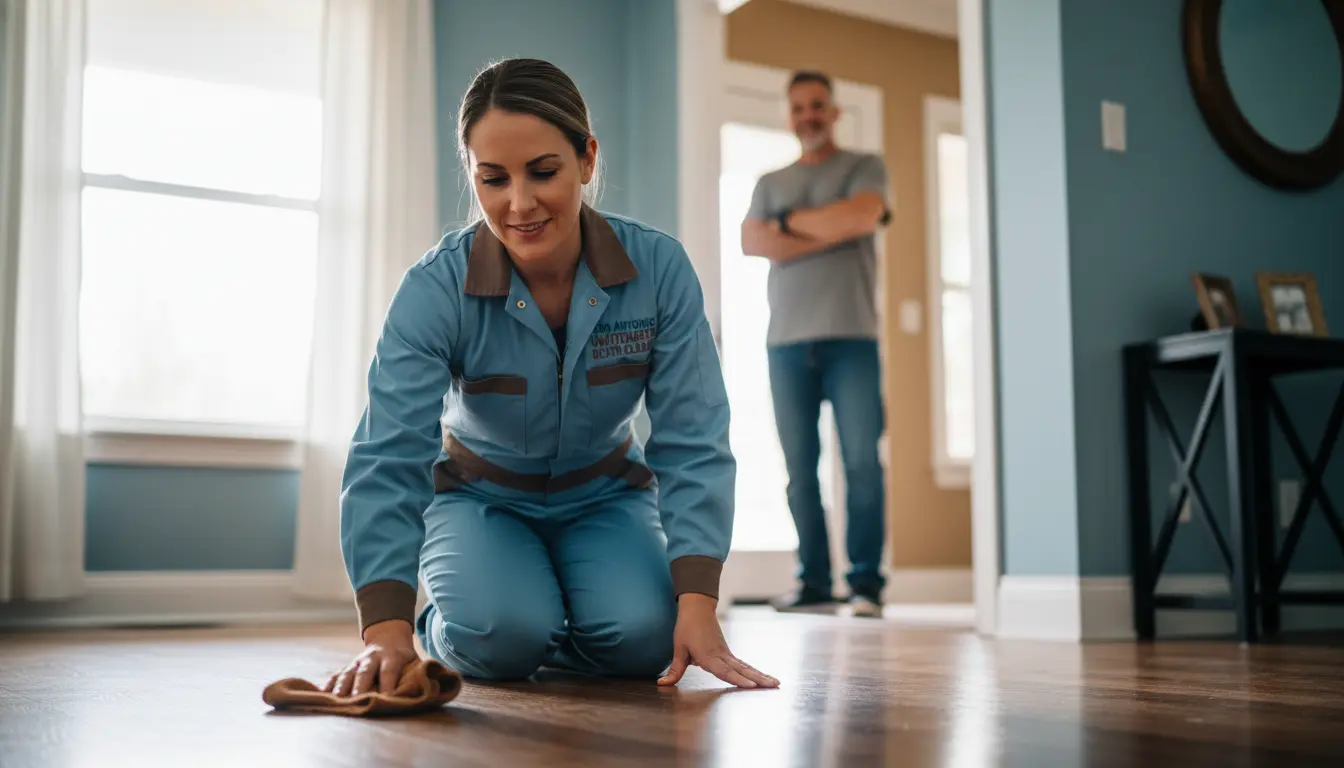
Most people assume that cleaning up after an unattended death is a straightforward janitorial task, something a strong stomach and a bottle of bleach can handle. That assumption is dangerously wrong. In San Antonio, where the average summer temperature pushes past 95°F and humidity levels regularly exceed 70%, biological decomposition accelerates dramatically. A home in Alamo Heights or a condominium near the I-35 corridor can become a complex environmental hazard zone within hours. The real question is not whether you can clean it yourself but how long professional unattended death cleanup actually takes and why speed is only one variable in a much larger equation.
Professional unattended death cleanup in San Antonio homes typically requires one to three full days of on-site work, sometimes longer if structural materials have been compromised. This timeline shocks most property owners because they imagine a quick scrub and disinfect. In reality, the process involves a meticulous forensic restoration protocol governed by OSHA Bloodborne Pathogens Standard 29 CFR 1910.1030 and the IICRC S540 Standard for trauma scene cleanup. Every hour spent on site is an hour invested in eliminating biological hazards, deodorizing porous materials, and restoring the structural integrity of the property. Rushing the job invites long-term health risks and a significant loss of property value.
The Biological Clock Does Not Pause for Convenience
Understanding how long unattended death cleanup takes in San Antonio homes requires a hard look at biology and chemistry. When the human body begins to decompose, it releases enzymes, bacteria, and gases that permeate nearby surfaces within hours. In San Antonio’s climate, that clock runs faster. The combination of heat and moisture creates an ideal environment for rapid bacterial growth, liquefaction of tissues, and severe odor migration through HVAC systems. By the time the death is discovered, which can be days or even weeks later, biological material has often saturated carpet padding, soaked into drywall, and wicked into wooden subfloors.
Professional remediation crews respond within two hours of a call in most San Antonio neighborhoods, but the actual work begins with a comprehensive risk assessment. Technicians don full personal protective equipment, establish containment zones using plastic sheeting and negative air machines, and conduct a detailed survey of affected areas. This initial assessment alone can take two to four hours for a standard 1,500-square-foot home. Only after mapping every contaminated zone do they begin removal of biohazardous materials. Rushing this step—skipping the assessment to save time—is one of the most expensive mistakes a property owner can make.
Your Home Is Not a Hospital: Why Standard Cleaning Fails
Many San Antonio homeowners assume that any cleaning service can handle the aftermath of an unattended death. That belief leads to devastating outcomes. Standard housekeeping crews lack the training, equipment, and regulatory knowledge to manage bloodborne pathogens, airborne spores, and chemical hazards. When well-meaning but untrained personnel attempt cleanup, they frequently spread contaminants rather than eliminate them. Mopping a blood-stained hardwood floor with household bleach actually denatures the surface of the biological material, creating a smear that pushes pathogens deeper into wood grain. The result is a false sense of cleanliness that hides ongoing health risks.
Professional biohazard remediation operates on an entirely different framework. Every infection control protocol is guided by the Centers for Disease Control and Prevention guidelines and the Environmental Protection Agency’s registered antimicrobials. Technicians use hospital-grade disinfectants with contact times of ten minutes or longer, applied via electrostatic sprayers that ensure even coverage on vertical and horizontal surfaces. ATP fluorescence testing, the same technology used in healthcare facilities, verifies that biological residues have been eliminated at the molecular level. This testing adds time to the process but is non-negotiable for genuine safety.
Data Comparison: Professional Remediation vs. Standard Residential Cleaning
| Feature/Metric | Professional Biohazard Remediation | Standard Residential Cleaning |
|---|---|---|
| Regulatory Compliance | OSHA 29 CFR 1910.1030, EPA FIFRA, IICRC S540, DOT hazardous waste transport | None—commercial cleaning has no biohazard training mandate |
| Pathogen Elimination | EPA-registered hospital-grade disinfectants with validated contact times; ATP testing for verification | Household bleach or all-purpose cleaners; no verification of biological elimination |
| Structural Assessment | Moisture meters, borescope inspection, subfloor evaluation for biological wicking | Visual inspection only—hidden contamination is never detected |
| Odor Removal | Ozone or hydroxyl generators; enzymatic vapor treatments; HVAC system decontamination | Air fresheners or open windows; odors return within hours |
| Waste Disposal | Licensed medical waste transport; incineration at permitted facilities; chain-of-custody documentation | Household trash pickup—illegal and dangerous |
| Liability Protection | Liability coverage for cross-contamination; hold-harmless agreements; property owner indemnification | No coverage; homeowner assumes full liability for injury or illness |
Source: IICRC S540 Trauma and Crime Scene Cleanup Standard
Three Advanced Diagnostic Tips Every Property Owner Should Know
The first diagnostic indicator of extensive contamination is the condition of porous flooring. When a death has gone undiscovered for more than 48 hours, biological fluids will have wicked through carpet fibers into the pad and subfloor. Even if the carpet looks clean from above, a professional moisture meter reading above 18% on the subfloor signals that removal and replacement are necessary. In San Antonio homes with plywood subfloors common in older neighborhoods like Terrell Hills, the moisture can travel laterally, contaminating areas that appear dry. Trusting visual inspection alone leaves half the problem untreated.
Second, HVAC systems act as biological distribution networks. Decomposition gases and airborne pathogens circulate through ductwork within minutes. A standard filter change does nothing to remediate this. Professional crews must isolate ductwork, apply antimicrobial fogging to every register, and often replace sections of flexible ducting that cannot be fully sanitized. In a San Antonio summer, when air conditioning runs continuously, the entire home becomes a recirculation chamber for bioaerosols. This is why every unattended death cleanup in this region must include HVAC decontamination as a standard step.
Common Mistakes Property Owners Make
The most expensive mistake is attempting cleanup alone. Family members or landlords often want to save money by handling the work themselves. They purchase bleach, trash bags, and gloves from the local San Antonio hardware store and spend hours scrubbing. What they do not realize is that bleach is not registered as a disinfectant for bloodborne pathogens by the EPA. It loses efficacy quickly in the presence of organic matter and can actually aerosolize pathogens when sprayed. After personal attempts, the property often smells worse and the contamination has spread. Calling San Antonio Unattended Death Cleanup at that point is a better option, but the cost has already increased because the contamination is more widespread.
Another frequent error is delaying the cleanup after discovery. Every hour that passes allows biological materials to continue degrading surfaces. In San Antonio’s heat, a 12-hour delay can convert a single-day job into a two-day job. The financial impact is immediate: more materials to remove, more hours of labor, higher disposal fees, and longer property vacancy. Property owners often underestimate the rate at which decomposition accelerates in the local climate. The window for minimal intervention closes rapidly.
Pricing Factors for Unattended Death Cleanup in San Antonio
- Minimum response fee and site mobilization: Most professional companies charge a mobilization fee of $350 to $600 to dispatch a crew with all required equipment and PPE to a San Antonio address. This covers the assessment phase and setup of containment zones.
- Hourly remediation rate for direct labor: Skilled technicians working in full OSHA-compliant PPE at a controlled pace typically charge $125 to $225 per hour per crew member. A standard two-person crew working an eight-hour day costs between $2,000 and $3,600 in labor alone.
- Cost of biohazardous waste disposal: In Texas, medical waste must be tracked and incinerated at permitted facilities. Disposal fees range from $300 to $800 per 55-gallon drum, and a typical unattended death scene in a San Antonio home generates two to five drums.
Three major factors drive cost variability. First, the total volume of biohazardous waste—larger bodies or longer decomposition periods produce more fluid saturation and more contaminated material. Second, the necessity for specialized HVAC decontamination adds $800 to $1,500 when ductwork must be fogged and registers cleaned. Third, the extent of structural material replacement directly ties to the discovery timeline; a death discovered after five days will almost always require subfloor and drywall removal, significantly increasing the total bill.
Safety Standards and Certifications That Protect You
Professional unattended death cleanup is not a trade learned from online videos. Every technician must complete OSHA 40-hour Hazardous Waste Operations and Emergency Response training and maintain annual certification in Bloodborne Pathogens Standard compliance. The IICRC S540 standard provides the only nationally recognized framework for trauma scene cleanup, covering everything from initial assessment to final verification. Companies that claim to offer biohazard cleanup without these certifications are operating outside accepted professional practice and putting property owners at risk.
The practical benefit of these standards is measurable. A property that has undergone professional biohazard remediation has been tested and verified as free of biological hazards. This matters immensely when selling a home. Prospective buyers in San Antonio often request disclosure of any unattended death on the property. Providing documentation from a certified remediation company demonstrates that the home has been restored to a safe, habitable condition. Without that documentation, the property may sit on the market for months or sell at a significant discount.
Frequently Asked Questions
Can I stay in my home during the unattended death cleanup?
Occupying the home during active remediation is strongly discouraged and often impossible due to safety protocols. The cleanup crew establishes negative air pressure containment zones to prevent airborne contaminants from spreading to unaffected areas of the property. This setup requires sealing off entire sections of the home and running industrial air scrubbers that create noticeable noise and airflow changes. Technicians also apply liberal amounts of EPA-registered chemicals with strong odors. For the safety of occupants and to allow the crew to work efficiently, property owners and their families should plan to be out of the home for the duration of the cleanup, which typically spans one to three days. If alternative housing is not available, the crew can sometimes complete the work in a single extended day, but this may compromise thoroughness and is not recommended.
Does homeowner insurance cover unattended death cleanup in San Antonio?
Many standard homeowners insurance policies include coverage for biohazard cleanup under the dwelling protection or debris removal portions of the policy. However, coverage varies widely by carrier and policy language. Some policies specifically exclude cleanup related to unattended death, while others require that the death be classified as accidental. The claim must usually be filed within a specific timeframe, often 30 days. Property owners should contact their insurance agent immediately upon discovery of the death and ask specifically about biohazard cleanup coverage. Professional remediation companies can provide itemized estimates and documentation that support the claim. In some cases, the cost of cleanup runs $3,000 to $8,000, and insurance will cover part or all of that amount depending on the policy limits.
How soon must cleanup begin after an unattended death is discovered?
Cleanup should begin within hours of discovery, not days. Biological decomposition continues in San Antonio’s climate at an accelerated rate even after the body is removed. Fluids that have already saturated porous materials continue to wick into adjacent surfaces, and decomposition gases continue to permeate the structure. A delay of 24 hours can allow contamination to spread from a single room to adjacent rooms and into the HVAC system. Professional crews typically arrive within two hours of a call and begin the assessment immediately. Property owners should not wait for insurance approval before initiating cleanup; many policies allow for emergency remediation and will honor the claim retroactively. Waiting only increases the eventual cost and complexity of the job.
What happens if I clean the scene myself before calling a professional?
Attempting self-cleanup almost always makes the situation worse and more expensive to resolve. Household cleaning products like bleach, hydrogen peroxide, and ammonia are not effective against bloodborne pathogens in the context of large-scale biological spills. They can cause chemical reactions that produce toxic fumes and may push biological material deeper into porous surfaces. Even after hours of scrubbing, ATP testing routinely shows that biological residues remain on surfaces that appear clean. Property owners who attempt self-cleanup often contaminate tools, clothing, and adjacent areas of the home. The costs of professional cleanup after a failed self-attempt can be 50% to 100% higher than if the professional crew had been called first.
Is odor removal included in unattended death cleanup, or is it an extra charge?
Professional unattended death cleanup always includes odor removal as a core component of the service, not an optional add-on. The same biological fluids that create visual contamination also produce volatile organic compounds responsible for the characteristic decomposition smell. If technicians only remove visible biological material and do not address odor, the smell will return as residual compounds off-gas from floors, walls, and ductwork. Standard protocol requires the use of ozone generators or hydroxyl generators in cycles that neutralize odors at the molecular level. In most San Antonio homes, this process adds 12 to 24 hours to the total timeline. It is factored into the initial quote and should never be a separate line item.
Professional Biohazard Remediation in San Antonio
Unattended death cleanup in San Antonio homes demands technical expertise, regulatory compliance, and a deep understanding of local environmental conditions. The timeline cannot be reduced to a single number because it depends on variables that only a skilled assessment can uncover: the condition of the structure, the duration of decomposition, the type of flooring and wall materials, and the extent of HVAC contamination. A professional crew from San Antonio Unattended Death Cleanup will evaluate these factors before providing a timeline and will communicate clearly about every step of the process.
What matters most is that the work is done correctly the first time. Cutting corners to save a day or a few hundred dollars creates risks that far outweigh any perceived savings. Biological hazards left behind can cause respiratory illness, infection, and long-term structural damage. Odors that are masked rather than eliminated reduce property value and make homes uninhabitable. Professional restoration is an investment in safety, peace of mind, and the long-term value of the property. For San Antonio families and property owners facing an already difficult situation, working with certified specialists is the most responsible choice.