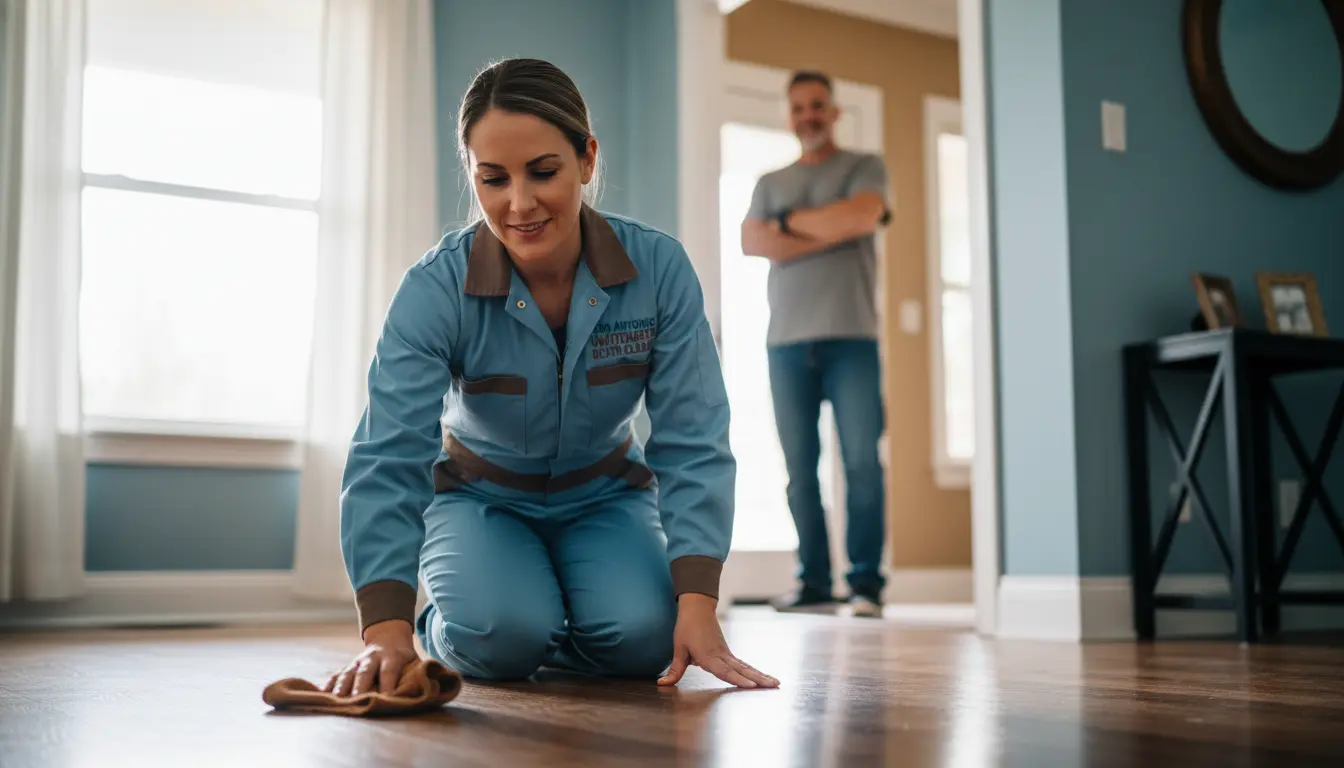
For property owners in San Antonio, the reality is sobering. The combination of high humidity, prolonged heat, and the prevalence of older residential structures with slab foundations creates a perfect storm for rapid bio-decomposition and deep structural contamination. A standard cleaning service cannot address the invisible hazards. Bloodborne pathogens, such as Hepatitis B and C, can remain viable in dried fluids for weeks. Bacterial colonies from decomposition can aerosolize and become airborne, posing direct respiratory risks. The only path to restoring a livable environment involves systematic containment, removal, and verification testing performed by trained professionals. San Antonio Unattended death cleanup provides this exact level of expertise, combining technical rigor with the discretion required for these sensitive situations.
Understanding the Biological Threat to Indoor Air
The primary hazard in any unattended death scene is not the visible stain; it is the bioaerosol load. When the human body begins to break down, it releases a complex mixture of gases and particulate matter. These particles, often smaller than five microns, can remain suspended in the air for extended periods. They carry bacteria and viruses that can cause serious illness if inhaled or if they come into contact with mucous membranes. This is the core reason why general cleaning fails: it does not address the airborne and deeply embedded contamination.
In San Antonio, the environmental factors accelerate this threat. The typical high humidity levels, often exceeding 70% during the summer months, provide the moisture necessary for bacterial and fungal growth to flourish. The heat increases the rate of enzymatic breakdown of tissues, accelerating the release of volatile organic compounds (VOCs) that create the characteristic odor. This odor is not just unpleasant; it is a sign of active microbial activity. Professional remediation focuses on eliminating the source of these contaminants, not merely masking them. This process begins with a thorough risk assessment and the establishment of containment barriers.
The Step-by-Step Process for Air Quality Restoration
Initial Assessment and Containment Setup
Before any cleaning begins, the team must establish a negative air pressure zone. This involves using industrial-grade negative air machines equipped with HEPA filtration to create a vacuum within the affected area. The goal is to prevent contaminated air from migrating to clean parts of the property. In a typical San Antonio home, the HVAC system is immediately shut down to stop the circulation of contaminated air throughout the ductwork. Sealing off the zone with heavy-gauge polyethylene sheeting is a standard first step, ensuring that the restoration process does not cause cross-contamination.
Physical Removal of Biohazardous Materials
All porous materials that have come into contact with biological fluids must be removed. This includes carpet, pad, baseboards, drywall up to the level of visible saturation, and any absorbent furnishings. In the case of the Bitters Road property, the saturated drywall and insulation were cut away and bagged in biohazard containers. This step is non-negotiable. Cleaning a porous material that has been soaked with biological fluid is ineffective; the contamination will remain deep within the structure. The physical removal is the only reliable method to eliminate the source of odors and pathogens. After removal, the subfloor and remaining structural elements are treated with an EPA-registered hospital-grade disinfectant.
Chemical Sanitization and Odor Neutralization
After all visible biohazards are removed, the team applies a two-step chemical process. First, a broad-spectrum disinfectant is sprayed on all hard surfaces to kill residual bacteria and viruses. The contact time, or dwell time, is critical. The chemical must remain wet on the surface for a specified period, usually ten minutes, to ensure pathogen inactivation. Second, an enzyme-based odor neutralizer is applied to break down the organic compounds that cause the persistent smell. These enzymes catalyze the breakdown of putrescine and cadaverine into non-odorous, non-toxic byproducts. This is far more effective than ozone generators, which can damage materials and do not address the source of the odor.
Verification with ATP Fluorescence Testing
Restoration is not complete until verification is performed. Adenosine triphosphate (ATP) testing is the industry standard for validating the cleanliness of a surface. A swab is taken from a treated area, and the sample is placed into a luminometer. The device measures the amount of ATP present, which is a direct indicator of biological contamination. A reading below a specific threshold, typically 10 to 30 Relative Light Units (RLU), confirms that the surface is safe. This objective data provides property owners with proof that the restoration was successful and that the indoor air quality has been restored to a safe standard for reoccupation.
Professional Remediation vs. Standard Cleaning
The difference between professional biohazard remediation and a standard janitorial approach is stark, particularly concerning safety and long-term results. Using household bleach on biological matter is a common but dangerous mistake. Bleach reacts with proteins in blood to create a chemical compound that can actually bind the stain and pathogens to the surface. It also releases toxic fumes that can irritate the lungs. The table below outlines the critical differences.
| Feature/Metric | Professional Biohazard Remediation | Standard Residential Cleaning |
|---|---|---|
| Regulatory Compliance | Adheres to OSHA 29 CFR 1910.1030, EPA disposal guidelines, and IICRC S540 standards. | No specific biohazard regulatory training or compliance. |
| Pathogen Elimination | Uses EPA-registered hospital-grade disinfectants with verified contact times and ATP testing for validation. | Typically uses household cleaners or bleach, which do not effectively kill bloodborne pathogens. |
| Structural Assessment | Evaluates subfloor, drywall, and HVAC for hidden contamination and microbial growth. | Cleans only visible surfaces, leaving contamination in porous materials. |
| Odor Removal | Uses enzymatic and hydroxyl-based technologies to neutralize VOCs at the molecular level. | Relies on masking agents or deodorizers that do not eliminate the source. |
Expert Diagnostic Insights for Restoration Specialists
Experienced remediation specialists develop an eye for hidden contamination. One key diagnostic tip is to use a moisture meter on drywall and subflooring adjacent to a visible stain. Even if the surface appears clean, elevated moisture levels can indicate capillary action has drawn biological fluid into the material. This hidden seepage is a primary cause of recurring odor and microbial growth weeks after an initial cleaning. If a moisture meter shows readings above 15% in a non-water-damaged area, the material likely requires removal.
Another critical insight involves understanding the behavior of biological fluids on different substrates. On a concrete slab, common in many San Antonio homes, blood and other fluids can penetrate the porous surface deeply. While concrete can be cleaned and sealed, heavy contamination may require grinding the surface to remove the embedded material. Simply cleaning the top layer will not solve the problem. The use of a specialized polymer-based sealant after cleaning is often necessary to encapsulate any remaining microscopic contamination and prevent future odor release.
Property owners frequently make mistakes that complicate the restoration process. A common error is attempting to clean with household bleach. As mentioned, this can fix the stain and pathogens to the surface, making professional removal more difficult. Another mistake is assuming that opening windows and running fans will disperse the odor and contaminants. This actually risks spreading bioaerosols to neighboring properties and the outdoors. Finally, delaying the cleanup for even a day allows decomposition to progress further, increasing the depth of contamination and the overall cost of restoration. The risks of ignoring unattended death cleanup fast are severe and can lead to permanent property damage.
Understanding the Factors That Influence Pricing
- Extent of Structural Material Replacement: The largest cost variable is the amount of drywall, flooring, subflooring, and insulation that must be removed and replaced. A small, contained area on a non-porous surface is far less expensive than a situation where fluids have saturated multiple rooms.
- Total Volume of Biohazardous Waste: All contaminated materials must be disposed of as regulated medical waste. This involves specialized containers, transportation, and incineration fees. The weight and volume of this waste directly impact the final cost.
- Necessity for Specialized HVAC Decontamination: If the HVAC system has circulated contaminated air, the entire ductwork must be cleaned and disinfected. This is a labor-intensive process that involves accessing all duct runs, applying antimicrobial agents, and using HEPA vacuum systems. This can add significant cost but is essential for restoring air quality.
For a realistic estimate, standard site mobilization fees for a certified team in San Antonio typically range from $500 to $1,500, depending on the time of day and the complexity of the scene. Hourly remediation rates for a three-person crew generally fall between $200 and $400 per hour. The total cost for a typical unattended death cleanup in a single room can range from $3,000 to $8,000, though extensive scenes involving multiple rooms and HVAC systems can exceed $15,000. It is always advisable to obtain a detailed, written estimate before work begins.
Safety Standards and Certifications
Compliance with established safety standards is not optional; it is a legal and ethical requirement. The Occupational Safety and Health Administration (OSHA) Bloodborne Pathogens Standard, 29 CFR 1910.1030, mandates specific training, personal protective equipment (PPE), and work practices for anyone handling human blood or other potentially infectious materials. A professional crew uses full Tyvek suits, double gloves, boot covers, and full-face respirators with P100 filters. This protects the workers and prevents them from becoming vectors for contamination.
Beyond OSHA, the Institute of Inspection, Cleaning and Restoration Certification (IICRC) sets the industry benchmark for trauma and crime scene cleanup through its S540 standard. This standard outlines the procedures for containment, cleaning, disinfection, and verification. Choosing a company that adheres to these standards ensures that the work is performed systematically and that the property is returned to a safe condition. Furthermore, the Environmental Protection Agency (EPA) regulates the disposal of biohazardous waste. A licensed company will have agreements with authorized waste management services to ensure proper incineration, protecting the community from potential exposure.
Frequently Asked Questions About Unattended Death Remediation
Can I clean an unattended death scene myself to save money?
Attempting to clean an unattended death scene without proper training, equipment, and certification is extremely dangerous. You risk exposure to bloodborne pathogens that can cause lifelong infections like Hepatitis B and C. Furthermore, household cleaning products are not effective against these pathogens. The 7 essential steps for professional death cleanup help highlight the complexity of the process. The financial savings are quickly outweighed by the potential health risks and the likelihood of incomplete remediation, which can lead to persistent odors and structural damage.
How long does the odor from an unattended death last if not cleaned professionally?
The odor will not dissipate naturally. The volatile organic compounds causing the smell are continuously released from the decomposing biological matter. Without the removal of the source and a thorough enzymatic treatment, the odor can persist for months or even years, especially in porous materials like drywall and carpet. The heat and humidity in San Antonio will accelerate the release of these compounds, making the odor more intense and pervasive. Professional remediation is the only way to permanently eliminate the odor.
Is it safe to stay in a home while the remediation is being performed?
No. The remediation process involves the creation of a containment zone with negative air pressure to prevent the spread of contaminants. The work area is a biohazard site. Occupants, especially those with compromised immune systems, respiratory conditions, or children, should not be present. The professional team will advise on a safe re-entry time, which is typically after the final ATP verification testing has confirmed the space is clean. In most cases, the property owner should plan to be out of the home for at least 24 to 48 hours.
What happens if the contamination has spread to the ductwork?
If the HVAC system was operating during or after the unattended death, the ductwork is almost certainly contaminated. The bioaerosols would have been circulated throughout the entire home. A standard duct cleaning is not sufficient. The system must be disinfected by a biohazard remediation specialist using an EPA-registered antimicrobial agent applied via a fogging system or direct spray. The HVAC unit itself, including the coil and blower, may also require cleaning. Failure to address the ductwork will result in recontamination of the cleaned areas as soon as the system is turned back on.
Professional Biohazard Remediation in San Antonio
Restoring a property after an unattended death is a complex operation that demands technical expertise, strict adherence to safety protocols, and a compassionate approach. The process of how to restore indoor air quality after an unattended death event hinges on the complete removal of contaminated materials, the use of hospital-grade disinfectants, and objective verification through ATP testing. Attempting to cut corners or use general cleaning services is a gamble with long-term health consequences and property value.
San Antonio Unattended death cleanup provides the professional, discreet, and technically rigorous service required for these challenging situations. With a deep understanding of local environmental factors, regulatory compliance, and the latest remediation technologies, the team ensures that every property is returned to a safe and livable condition. Whether you are a property manager, a family member, or a homeowner, trusting the restoration to certified professionals is the only responsible course of action. The peace of mind that comes from knowing the job was done right, with verifiable results, is invaluable.