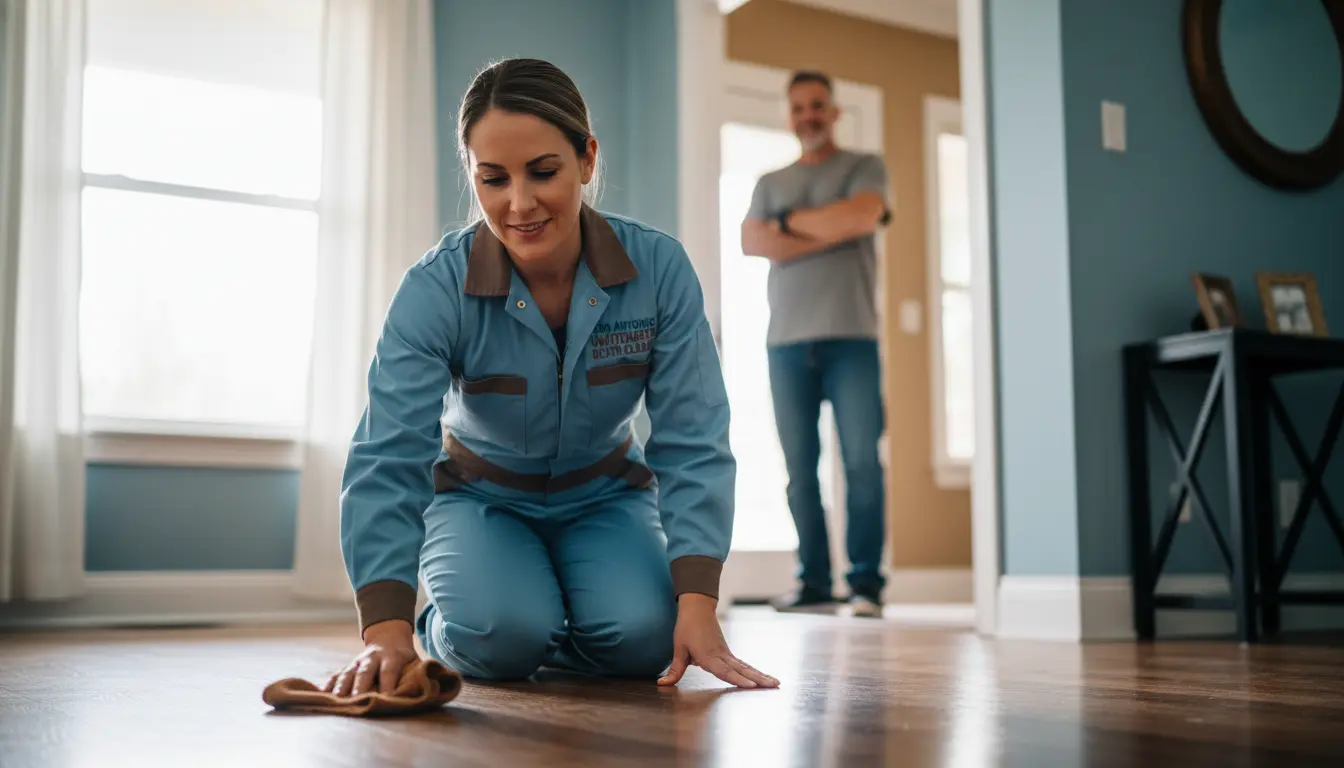
The technician paused at the threshold, the air still thick with the unmistakable weight of a space that had been closed for weeks. In the quiet of a San Antonio bungalow just off Broadway, the work of restoring a home after an unattended death was about to begin—and nothing in the family’s preparation had accounted for the biological reality that had seeped into the floorboards. That moment, repeated across hundreds of residential sites in Bexar County, underscores a truth most property owners only grasp after the fact: how a property is readied before the cleanup crew arrives can mean the difference between a complete restoration and a prolonged, costly struggle with hidden contamination.
Learning how to prepare a property for professional biohazard remediation is not merely about clearing clutter or opening windows. It involves understanding the cascade of biological hazards that follow an unattended death, the regulatory framework governing their removal, and the practical steps that protect both the cleanup team and the property’s long-term habitability. For families and property managers in San Antonio, where South Texas humidity can accelerate decomposition timelines and drive biological seepage deep into porous materials, preparation that accounts for these local conditions is essential. This guide provides the technical roadmap for that preparation, grounded in OSHA Bloodborne Pathogens Standard 29 CFR 1910.1030, the IICRC S540 Standard for Trauma and Crime Scene Cleanup, and decades of field experience in the San Antonio metropolitan area.
Working with a trusted firm like San Antonio Unattended Death Cleanup ensures that every phase of remediation follows strict protocols. But the groundwork you lay before professionals arrive directly influences the efficiency, safety, and outcome of the entire process. From securing the site against unauthorized entry to preserving evidence for proper documentation, each preparatory step carries weight.
Understanding the Biological Threat in a San Antonio Context
Before any physical preparation begins, grasping the nature of the biohazard is crucial. An unattended death, particularly one that goes undiscovered for days or weeks, initiates a process of decomposition that releases a complex mixture of biological fluids, gases, and microorganisms. Blood and bodily fluids carry bloodborne pathogens such as hepatitis B (HBV), hepatitis C (HCV), and human immunodeficiency virus (HIV). As tissues break down, additional bacteria and fungi proliferate, creating an environment where cross-contamination prevention becomes a matter of public health.
San Antonio’s climate intensifies these dynamics. The region’s high ambient heat and humidity, especially during the long summer months, can accelerate decomposition rates by a factor of two or three compared to cooler, drier environments. A body that might take ten days to reach advanced decay in a temperate climate can reach the same stage in under a week during a July heatwave along the I-35 corridor. This acceleration means that biological fluids wick into drywall, hardwood, and subflooring more rapidly, and odor-causing volatile organic compounds (VOCs) penetrate deeper into the structure. Professional remediation teams account for this by using industrial-grade negative air machines and hospital-grade disinfectants, but property owners who delay preparation risk allowing contamination to spread further.
Initial Steps: Securing the Scene and Restricting Access
The first preparatory action after law enforcement and coroner clearance is to secure the property. This is not a formality. Unrestricted access by family members, well-meaning neighbors, or untrained personnel can create secondary contamination—tracking biological material onto carpets in other rooms, disturbing evidence needed for insurance claims, or being exposed to airborne pathogens. In San Antonio, where many older residential structures in areas like Alamo Heights or Helotes have limited ventilation, the risk of aerosolized contaminants spreading through open doors is real.
Post a clear notice on the entry door indicating that biohazard remediation is in progress and that the site is off-limits to unauthorized individuals. This step is as much about legal liability as it is about safety. Property owners should coordinate with local authorities to ensure the scene has been released for cleanup before anyone enters. Once cleared, the most practical approach is to hand over a set of keys to the remediation team and keep a log of anyone who does enter the property. In many cases, a 24-hour biohazard service can mobilize within hours, which minimizes the window during which the site remains vulnerable.
Ventilation and Environmental Control
While professional teams will set up negative air pressure systems to contain airborne particles, property owners can take preliminary steps to improve air quality before the crew arrives. If the HVAC system is still operational and has not been compromised by biological fluids, turn it off. Running the system without proper filtration can circulate microbial contaminants throughout the ductwork, turning the entire house into a contaminated zone. This is a common oversight that leads to the need for specialized HVAC decontamination later.
Open windows only if they are on the side of the house away from the primary contamination area and if doing so does not draw in outside heat or humidity that could worsen decomposition. In San Antonio’s climate, this is a balancing act. A better approach is to wait for the remediation team, who will bring high-efficiency particulate air (HEPA) filtration units and negative air machines designed to create a pressure differential that keeps contaminants contained. The professional workflow typically begins with isolating the affected zone using polyethylene sheeting and zipper doors, a step that should never be attempted by untrained individuals.
Removal of Personal Property: What to Keep and What to Discard
One of the most emotionally fraught aspects of preparing a property for remediation is deciding what to do with the belongings inside. Porous items—upholstered furniture, mattresses, carpets, clothing, curtains, and bedding—that have been directly exposed to biological fluids or have been in the same room for an extended period are typically unsalvageable. The IICRC S540 standard states that porous materials exposed to bodily fluids must be removed and disposed of as regulated waste because they cannot be effectively sanitized to a level that eliminates all pathogens.
Non-porous items such as glass, metal, and hard plastics that are at least three feet from the primary contamination source may be salvageable after professional cleaning with an EPA-registered disinfectant and ATP fluorescence testing to confirm cleanliness. However, this determination requires a trained eye. Many property owners err on the side of saving items that carry hidden biological residue, only to discover later that odors or health issues persist. A professional personal property sorting service can systematically evaluate each item, categorizing it for restoration, donation, or disposal. This service not only ensures safety but also provides documentation for insurance claims.
For items that must be discarded, they become part of the biohazard waste stream. In San Antonio, biohazard waste removal follows strict Texas Commission on Environmental Quality regulations. The remediation team will package these materials in red biohazard bags and arrange for incineration through licensed medical waste disposal facilities. Property owners should not attempt to transport or dispose of any potentially contaminated items themselves.
Documenting the Condition for Insurance and Legal Purposes
Before any cleanup begins, thorough documentation is critical. Take photographs and videos of every room, focusing on the contamination zone, structural damage, and personal property. Include wide-angle shots that show the entire room as well as close-ups of specific areas where biological seepage is visible. This record serves multiple purposes: it supports insurance claims for property damage, provides evidence for legal proceedings related to the death, and helps the remediation team plan their approach.
In San Antonio, where many homes have historic designations or unique architectural features that require specialized restoration, documentation also helps in identifying structural components that may need custom fabrication. For example, a home in the King William Historic District might have original pine flooring that, while salvageable in theory, may require extensive sub-floor remediation if fluids have seeped through gaps. Having a clear photographic record allows the remediation team to consult with restoration contractors early in the process.
Keep all correspondence with law enforcement, the medical examiner, and insurance adjusters in a single file. This file should also include the scene release paperwork and any reports from the coroner. Providing a copy to the remediation team helps them align their work with any legal holds or evidentiary requirements.
Coordinating with Utility Companies
In many cases, the water and electricity to a property where an unattended death occurred may have been shut off by the utility company or by family members. Before remediation can begin, the team needs access to running water and power to operate their equipment. Hot water is particularly important for mixing cleaning solutions and for the initial rinse phase of structural decontamination.
Contact CPS Energy and the San Antonio Water System to have utilities restored at least 24 hours before the scheduled remediation. If the property is vacant, inform the utility companies that a professional biohazard remediation is taking place so they do not suspend service during the process. In situations where the property has been condemned or is under a health department order, work with the remediation company to secure the necessary permits for temporary utility restoration.
Gas lines should be inspected by a licensed professional before the remediation team uses any equipment that could ignite flammable vapors. Decomposition gases, including methane and hydrogen sulfide, can accumulate in enclosed spaces and pose an explosion risk. This is rarely a concern in well-ventilated areas but becomes critical in basements or crawl spaces common in older San Antonio homes.
The Role of Professional Remediation Teams
While property owners can take several preparatory steps, the actual remediation is a highly technical process that requires specialized training and equipment. A certified team follows a step-by-step workflow that begins with a comprehensive risk assessment using personal protective equipment (PPE) that includes Tyvek suits, full-face respirators with P100 filters, and nitrile gloves. The team then uses industrial-grade negative air machines to create a pressure differential that prevents airborne contaminants from escaping the work zone.
Physical removal of biohazardous materials is conducted using forensic cleaning tools such as sharps containers, biohazard bags, and chemical absorbents. After gross debris is removed, the team applies EPA-registered hospital-grade disinfectants with demonstrated efficacy against bloodborne pathogens. This is followed by ATP fluorescence testing, which measures the presence of adenosine triphosphate—a marker for biological residue. If ATP levels exceed the threshold established by the IICRC S540 standard, the area is re-cleaned and retested until it passes.
For properties in San Antonio where decomposition has been prolonged, the team may also perform microbial remediation using antimicrobial fogging or ozone treatment to address odor molecules that have adsorbed into porous surfaces. This step is particularly important in the humid South Texas climate, where lingering odors can attract pests and create an ongoing health concern. The entire process is documented with chain-of-custody forms for waste disposal and final clearance reports that can be shared with insurance providers and future occupants.
Data Comparison: Professional Biohazard Remediation vs. Standard Janitorial Cleaning
Understanding the difference between professional biohazard remediation and a standard cleaning service helps property owners appreciate why specialized preparation is necessary.
| Feature/Metric | Professional Biohazard Remediation | Standard Residential Cleaning |
|---|---|---|
| Regulatory Compliance | OSHA 29 CFR 1910.1030, EPA, IICRC S540, TCEQ | None or basic health codes |
| Pathogen Elimination | EPA-registered hospital-grade disinfectants with ATP testing | Household bleach or all-purpose cleaners |
| Structural Assessment | Inspection for biological seepage, moisture mapping, sub-floor evaluation | Visual surface inspection only |
| Waste Disposal | Licensed medical waste incineration with chain-of-custody | Standard trash pickup |
| Equipment Used | Negative air machines, HEPA vacuums, forensic cleaning tools, PPE | Mops, buckets, household vacuums |
| Odor Elimination | Antimicrobial fogging, ozone treatment, encapsulation | Air fresheners or open windows |
Source: IICRC S540 Trauma and Crime Scene Cleanup Standard
Expert Insights: Advanced Diagnostic Tips for Property Owners
Professional remediation specialists use several diagnostic techniques to identify hidden contamination that would be invisible to an untrained eye. Understanding these can help property owners ask the right questions and avoid costly oversights.
Detecting Hidden Biological Seepage. Biological fluids do not always stay on the surface. They can seep through carpet padding, into subflooring, and along baseboards, traveling several feet from the original source. Professionals use moisture meters and thermal imaging cameras to detect elevated moisture levels that correlate with biological fluid intrusion. In San Antonio’s humid climate, distinguishing between moisture from biological sources and ambient humidity requires experience. If you notice a musty odor or discoloration along baseboards after the initial cleanup, request an ATP test of those areas before moving forward.
Why Porous Materials Require Replacement, Not Cleaning. Many property owners assume that a thorough cleaning can salvage carpets or upholstered furniture that has been near a contamination site. The IICRC S540 standard is clear: porous materials that have been directly exposed to bodily fluids or have been in the same room for more than 72 hours during active decomposition must be removed. The reason is that pathogens and their byproducts become trapped in the fiber matrix, where even high-pressure cleaning cannot reach them. Attempting to clean such items risks cross-contaminating cleaning equipment and other areas of the property.
The Importance of Negative Pressure. Negative air pressure is not a luxury—it is a containment strategy. Without it, airborne particles from the affected area can migrate through HVAC systems and under doors into clean zones. In a multi-story home or a property with shared walls, this can create a secondary contamination zone that expands the scope and cost of remediation. Professional teams set up negative air machines with HEPA filtration before any physical work begins, and they maintain that pressure differential until final clearance testing is complete.
Common Mistakes Property Owners Make
Even with the best intentions, property owners often take steps that complicate rather than simplify the remediation process. Three mistakes recur with frustrating regularity in San Antonio.
Using Household Bleach on Biological Matter. Household bleach is not a registered disinfectant for bloodborne pathogens in the concentrations typically sold at grocery stores. It degrades quickly in the presence of organic matter, meaning it can actually spread biological material rather than neutralize it. Worse, bleach fumes can combine with decomposition gases to create hazardous chloramine compounds. Professional teams use EPA-registered hospital-grade disinfectants with specific kill claims for HBV, HCV, and HIV, applied at the correct dwell time.
Waiting for Odor to Dissipate Naturally. In San Antonio’s heat, odors do not fade—they embed. Volatile organic compounds released during decomposition adsorb into drywall, wood, and fabric, forming a persistent source of smell that worsens with humidity. Waiting days or weeks before calling a professional allows these odors to set, making odor elimination significantly more difficult and expensive. A prompt response, including a 7 essential steps for professional death cleanup help, can prevent this.
Allowing Untrained Personnel into the Site. Family members, well-meaning friends, or even general contractors often enter the property out of curiosity or a desire to help. Every person who enters brings the risk of tracking contamination to other areas or being exposed to airborne pathogens. In San Antonio, where many families live in extended households, this can expose vulnerable individuals including children and the elderly. The safest approach is to restrict access to only the certified remediation team until the site receives final clearance.
Pricing Factors for Biohazard Remediation in San Antonio
The cost of professional biohazard remediation varies based on several factors, and understanding these helps property owners budget appropriately.
- Site Mobilization Fee: Most remediation companies charge a flat fee for dispatching a crew and equipment to the property. In San Antonio, this typically ranges from $350 to $750 depending on the distance from the company’s base and the urgency of the response. A 24-hour biohazard service may include a higher mobilization fee but can prevent the need for additional remediation later.
- Hourly Remediation Rates: The per-hour rate for a certified technician ranges from $150 to $300, with the rate increasing for crews that include an IICRC-certified supervisor. The number of hours required depends on the size of the affected area, the duration of decomposition, and the complexity of the structural materials involved.
- Biohazard Waste Disposal: Disposal costs are calculated per pound or per container. Blood-soaked materials, personal protective equipment, and disposable cleaning tools are all classified as regulated medical waste. In Bexar County, disposal through a licensed facility costs between $0.50 and $1.50 per pound, and a typical unattended death scene generates 50 to 200 pounds of waste.
Three primary factors influence the total cost. First, the extent of structural material replacement required—whether drywall, flooring, or cabinetry must be removed—directly increases both labor and disposal costs. Second, the total volume of biohazardous waste, which grows with the duration of decomposition and the size of the contamination zone. Third, the necessity for specialized HVAC decontamination, which can add hours of duct cleaning and HEPA vacuuming.
Safety Standards and Certifications That Matter
When selecting a remediation provider, verifying certifications ensures that the work meets regulatory and industry standards. The OSHA Bloodborne Pathogens Standard 29 CFR 1910.1030 requires that any employee with occupational exposure to blood or other potentially infectious materials receives annual training and uses appropriate PPE. A certified remediation company will have a written exposure control plan and documentation of every technician’s training.
The IICRC S540 Standard for Trauma and Crime Scene Cleanup is the definitive industry guideline. It specifies procedures for pre-cleaning assessment, containment, cleaning, disinfection, and verification. A company that follows this standard uses ATP testing to confirm biological cleanliness, not just visual inspection. This is the difference between a surface that looks clean and a surface that is truly safe.
In Texas, biohazard waste disposal is regulated by the Texas Commission on Environmental Quality. A reputable provider will have a waste hauler permit and provide a chain-of-custody manifest for all disposed materials. This documentation protects property owners from liability if waste is later found in unauthorized locations. For San Antonio residents, working with a company that holds these certifications—such as those listed on the About Us page of a trusted local provider—offers peace of mind that the remediation is comprehensive and legally compliant.
Frequently Asked Questions About Unattended Death Remediation
How long does the remediation process typically take?
The duration depends on the severity of the contamination. A single room with a death discovered within 48 hours may require one to two days of active work plus a day for final clearance testing. A property where decomposition has progressed over weeks, or where bodily fluids have migrated through multiple rooms, can take five to ten days. The team provides a timeline after the initial assessment, and weather conditions in San Antonio—particularly high humidity—can extend the time needed for structural drying and odor neutralization.
Is it safe to stay in the home during remediation?
No. The remediation zone must be isolated from occupied areas using negative air pressure and physical barriers. Even if the contamination is limited to a single room, the risk of airborne pathogen migration makes occupancy inadvisable. Professional teams recommend that all residents vacate the property until final clearance testing is complete. In cases where the property is the primary residence, the remediation company can help coordinate temporary housing arrangements or prioritize the restoration of a safe living area first.
What should I do with personal items that were not directly contaminated?
Items in adjacent rooms that have no visible contamination and no odor absorption are generally safe. However, professionals recommend having them tested with ATP swabs if they are porous and have been in the same building for an extended period. Hard surface items can be cleaned with an EPA-registered disinfectant, but the remediation team should perform this cleaning to ensure proper technique and documentation. A service like personal property sorting can systematically evaluate and handle these items.
Will my homeowner’s insurance cover the cost of remediation?
Many homeowner’s insurance policies cover biohazard remediation under their property damage provisions, particularly if the death occurred on the insured property. However, coverage varies. Some policies exclude cleanups related to unattended death unless a specific rider is added. The best course of action is to contact your insurance agent immediately after the death is discovered and request a written confirmation of coverage. The remediation company can provide a detailed estimate and documentation to support the claim.
Final Thoughts
Preparing a property for professional biohazard remediation is a task that demands both practical action and emotional resilience. The steps outlined here—securing the scene, managing ventilation, evaluating personal property, documenting conditions, and coordinating with utilities—create the foundation for a successful restoration. But they are only the beginning. The actual work of eliminating pathogens, restoring structural integrity, and returning the property to a safe, habitable state requires the expertise of certified professionals who understand the science of biological contamination and the regulations that govern its removal.
In San Antonio, where the climate and the unique characteristics of local homes add layers of complexity, working with a team that has deep experience in the region is invaluable. From trauma scene remediation to hoarder property remediation, the right provider approaches each site with the technical rigor needed to achieve complete decontamination and the compassion required to support families during a difficult time. If you are facing the need for biohazard remediation in San Antonio, contact San Antonio Unattended Death Cleanup to discuss your situation and begin the process of restoring your property with professionalism and care.