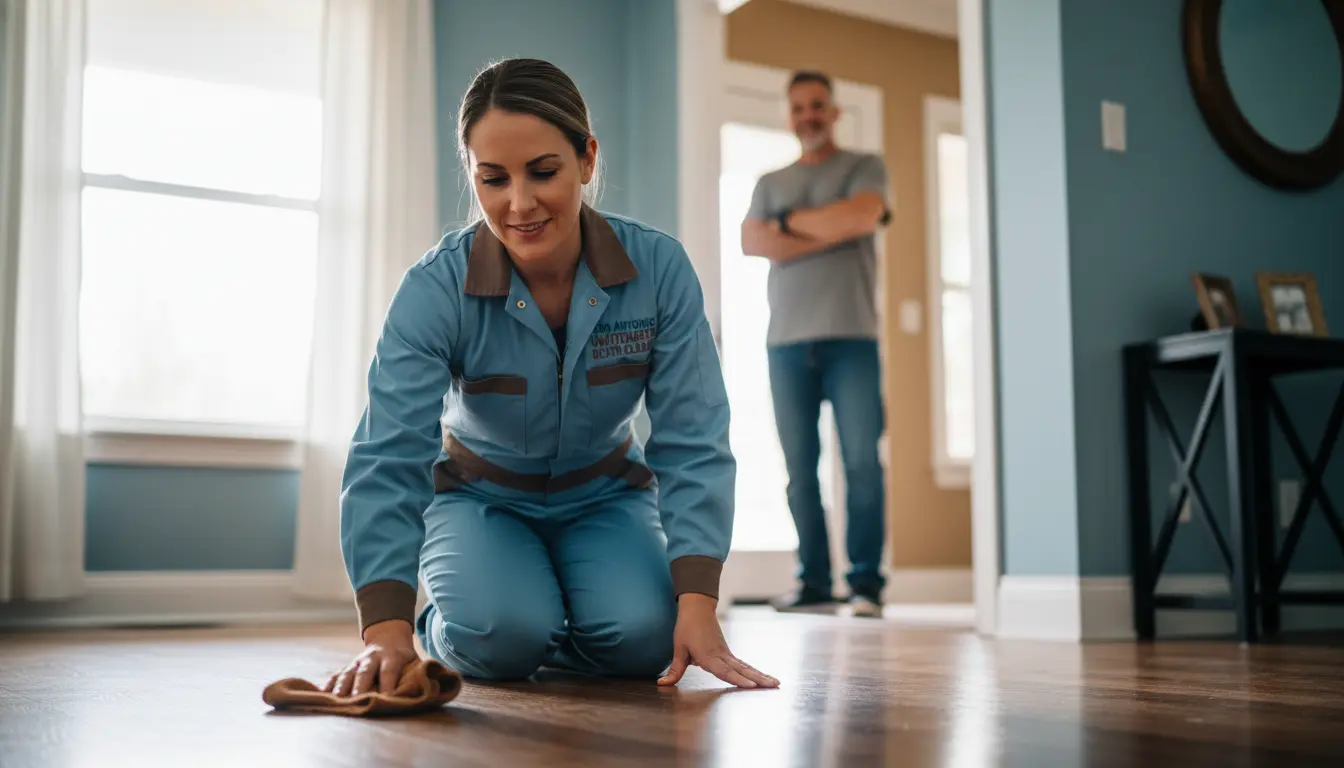
Biohazard remediation is not a standard cleaning service. It is a structured, multi-phase operation governed by federal, state, and industry-specific standards. When a company like San Antonio Unattended Death Cleanup receives a call for an unattended death, the property is already compromised on a microbial and structural level. The disposal of contaminated materials begins with a professional risk assessment, not a mop and bucket. The core objective is to protect every living person who will enter that space afterward, from the property owner to the future tenant. Every piece of material removed from the scene is handled under strict protocol because the biological hazards involved — bloodborne pathogens, bodily fluids, and the byproducts of decomposition — pose real, documented health risks that do not disappear with household cleaners.
The Initial Risk Assessment and On-Site Containment Protocol
The first step in any proper remediation does not involve touching a single contaminated item. The lead technician performs a visual and instrument-based walkthrough, identifying the zones of contamination, the airflow patterns within the structure, and the types of materials that have been exposed. In San Antonio, where older homes in areas like Leon Valley or Helotes often have original hardwood floors and unsealed subflooring, the risk of biological seepage into porous materials is high. The technician marks the perimeter and establishes a containment area using heavy-duty polyethylene sheeting and zipper entry systems. This is not a suggestion; it is an IICRC S540 standard that prevents cross-contamination to clean zones of the property.
Once the containment zone is sealed, negative air pressure is introduced. Industrial-grade negative air machines, fitted with HEPA filters rated for 99.97% efficiency at 0.3 microns, are positioned to pull air from the contaminated space and exhaust it outside or through a filtration system. This step is critical because airborne pathogens and particulate matter can travel through HVAC ducts and under door gaps. Without this pressure differential, the contamination spreads to adjacent rooms, furniture, and even neighboring units in multi-family buildings. The goal here is to isolate the hazard before any physical removal begins. The technicians then don full personal protective equipment — Tyvek suits, N-100 respirators, chemical-resistant gloves, and boot covers — as specified under OSHA’s Bloodborne Pathogens Standard 29 CFR 1910.1030. Every person entering that space is protected, and every item leaving the space is treated as regulated medical waste.
Step-by-Step Removal and Decontamination of Materials
With containment established, the physical removal of contaminated materials begins. This is where the technical process diverges sharply from what a standard janitorial crew might attempt. Soft goods such as carpeting, padding, upholstered furniture, and mattresses are almost always removed and disposed of. In a San Antonio summer, the heat accelerates the breakdown of cellular tissue, and the resulting fluids saturate porous materials deeply. A technician will cut carpet into manageable sections, roll them inward to trap any residual fluid, and seal each section in a 6-millimeter-thick red biohazard bag. Those bags are then placed into rigid, leak-proof containers for transport. The same applies to any drywall that shows visible staining or wicking. The standard practice is to cut drywall at least 12 to 18 inches above the visible contamination line to ensure that unseen capillary action has been fully removed.
Non-porous items like hard-surface countertops, tile floors, and metal fixtures are not automatically saved. Each surface is subjected to a rigorous cleaning and disinfection process that uses EPA-registered hospital-grade disinfectants with specific contact times — typically ten minutes for enveloped viruses and up to twenty minutes for non-enveloped viruses. The technicians apply the chemical, allow it to dwell for the full duration, and then physically wipe the surface down with absorbent wipes. This process is often repeated in a three-step method: gross removal of visible material, primary cleaning with a detergent to break down organic residue, and final disinfection with a high-concentration antimicrobial. The entire workflow is documented with photographs and a chain-of-custody log for the waste. Every piece of contaminated material that leaves the property is tracked from the scene to the licensed medical waste incineration facility, which is typically located within the state of Texas.
Specialized Tools and Enzymatic Treatments
Beyond physical removal, the team applies specialized enzyme treatments to neutralize organic matter at a molecular level. These enzymes, often derived from bacterial cultures, break down proteins and fatty acids that standard disinfectants cannot fully degrade. For example, in a case involving a two-week unattended death in a Schertz home, the team used a foaming enzyme spray on the subfloor beneath a hardwood floor that had been partially cleaned by a family member. The foam revealed residual biological matter that was invisible to the naked eye. After the enzyme dwelled for fifteen minutes, the area was rinsed, and an ATP fluorescence test was applied. The ATP test measures adenosine triphosphate, the energy molecule present in all living cells. A reading above 10 relative light units typically indicates insufficient cleaning. In that Schertz case, the initial reading was 4,200 RLUs. After the full enzyme and disinfection protocol, the reading dropped to 12 RLUs, confirming that the surface was safe for reoccupation.
Professional Remediation vs. Standard Janitorial Cleaning: A Data Comparison
The distinction between a certified biohazard remediation company and a standard cleaning crew is not a matter of opinion; it is a matter of measurable outcomes. The table below illustrates key differences based on industry standards and real-world application.
| Feature/Metric | Professional Biohazard Remediation | Standard Residential Cleaning |
|---|---|---|
| Regulatory Compliance | Full adherence to OSHA 29 CFR 1910.1030, EPA waste disposal regulations, and IICRC S540 standards. Waste is tracked and incinerated at licensed facilities. | No formal regulatory framework for biological hazards. Cleaning staff often untrained in bloodborne pathogen safety. |
| Pathogen Elimination | EPA-registered hospital-grade disinfectants with verified contact times. ATP fluorescence testing used to confirm residual biological material is below 10 RLUs. | Household bleach or general-purpose cleaners used. Contact times rarely measured. No objective verification of pathogen kill. |
| Structural Assessment | Full evaluation of subflooring, drywall, and HVAC systems for hidden seepage. Porous materials replaced rather than cleaned. Negative air pressure used to prevent airborne spread. | Visual inspection only. No assessment of microbial migration into porous materials. No containment protocol. |
Source: IICRC S540 Trauma and Crime Scene Cleanup Standard
The practical consequence of this difference is direct. A property that receives standard cleaning after a biological contamination event is at risk of long-term microbial growth, persistent odor that returns after a few weeks, and potential liability for future occupants who may develop respiratory issues or infection. A property that undergoes professional biohazard remediation is structurally decontaminated and certified as safe for reoccupation. For a San Antonio property owner, especially one managing a home in Universal City or Selma where turnover is frequent, the choice is not about cost alone. It is about protecting the asset and the people who will live there.
Expert Insights: Diagnostic Tips and Common Mistakes
Experienced remediation specialists often rely on diagnostic observations that are not immediately obvious to an untrained eye. One such insight is the detection of hidden biological seepage along baseboards and electrical outlets. When bodily fluids spread across a floor, they follow gravity and capillary action, seeping into the gap between the baseboard and the subfloor. A technician who knows to remove the baseboard and check the backside with an ATP swab will often find contamination that no surface wipe would detect. This is why the removal of baseboards is standard in unattended death remediation, not optional.
Another critical diagnostic tip is the evaluation of porous materials. It is a common misconception that a porous surface, such as a wooden floor or a sofa, can be cleaned effectively by scrubbing or applying a chemical. In reality, organic material penetrates the surface of porous materials to a depth that cannot be accessed by any liquid disinfectant. The only safe approach is removal and disposal. A sofa that has been in a room with a two-day-old decomposition event may look clean on the surface, but the foam padding will retain the biological load indefinitely, releasing odor and potential pathogens with every use. The rule is simple: if it is porous and it has been exposed, it must be removed.
The third diagnostic tool that professional teams use is the continuous monitoring of airborne particulates. A particle counter, placed in the containment zone and in adjacent clean spaces, provides real-time data on whether the negative air system is functioning correctly. If the particle count in the adjacent room rises above baseline, the containment seal may be compromised. This is particularly important in San Antonio’s urban heat island effect along the I-35 corridor, where thermal currents can push air upward and through walls. The team must adjust the placement of negative air machines or reinforce the containment seals to maintain isolation.
Common Mistakes Property Owners Make
One of the most frequent errors property owners commit is using household bleach on biological matter. Bleach is a strong oxidizer, but it loses its effectiveness quickly in the presence of organic material. When bleach hits blood or tissue, it reacts violently, creating a compound that can actually fix the stain and make it harder to remove. Worse, the reaction can release chlorine gas, which is toxic if inhaled. The proper approach is to use an enzymatic cleaner first to break down the organic component, followed by a disinfectant that is specifically formulated for biological hazards.
A second common mistake is waiting for the odor to dissipate naturally. In the dry climate of a well-ventilated home, odor may fade over weeks. But in San Antonio, where the combination of high ambient heat and humidity accelerates microbial reproduction, the odor is not a byproduct; it is a sign that active decomposition is continuing. Odor molecules are carried by microbial spores. If the odor is present, the biological contamination is still present. The correct response is immediate professional intervention. Delaying by even 24 hours can increase the cost of remediation as the contamination spreads further into the subfloor and walls.
Pricing Structures and Influencing Factors
- Standard site mobilization fees range from $300 to $750, covering the transportation of equipment, containment materials, and the initial risk assessment by a certified lead technician.
- Hourly remediation rates typically fall between $125 and $250 per technician, depending on the complexity of the scene and the level of certification required. A scene involving a prolonged unattended death will often require a three-person team working for several days.
- Specialized disposal fees for biohazardous waste are calculated by weight. The average cost is $1.50 to $3.00 per pound, with a typical scene generating 50 to 200 pounds of regulated medical waste that must be incinerated at a licensed facility.
Three primary factors influence the final cost of a biohazard remediation project. The first is the extent of structural material replacement. If the contamination has seeped into the subfloor, drywall, and insulation, the cost of removal and replacement can exceed the cost of the actual cleaning by a significant margin. In a recent case in Boerne, a three-week unattended death required the replacement of 400 square feet of subfloor and the entire lower section of three walls, adding $4,500 to the total project cost.
The second factor is the total volume of biohazardous waste. A scene in a small apartment may generate 80 pounds of waste, while a scene in a larger single-family home with multiple rooms affected can generate over 300 pounds. The disposal fees scale directly with the weight. The third factor is the necessity for specialized HVAC decontamination. If the building’s HVAC system was active during the decomposition period, the ductwork may be contaminated with microbial spores and particulate matter. Cleaning and sanitizing the ductwork requires a separate protocol using duct-cleaning robots and antimicrobial fogging, which can add $1,200 to $3,000 to the overall cost. Property owners should ask for a clear breakdown of these three categories in any estimate.
Safety Standards and Certifications That Matter
The safety of the occupants and the remediation team is not a matter of goodwill; it is a matter of compliance with specific federal and industry standards. The most referenced regulation in this field is OSHA’s Bloodborne Pathogens Standard, 29 CFR 1910.1030, which mandates the use of universal precautions, the provision of hepatitis B vaccinations for exposed employees, and the proper disposal of regulated medical waste. This is not optional. A company that does not follow this standard is operating outside the law and putting everyone at risk.
Beyond OSHA, the IICRC S540 Standard for Trauma and Crime Scene Cleanup provides the detailed procedural framework for every step of the process, from the initial assessment to the final clearance testing. Certification under this standard requires both written examination and supervised field experience. It covers the science of microbiology, the chemistry of disinfectants, and the engineering of containment systems. For a property owner in San Antonio, hiring an IICRC-certified firm means that the work is being conducted according to a nationally recognized standard, not just a company’s internal training manual.
Frequently Asked Questions About Unattended Death Remediation
Is it safe to stay in the home while the remediation is happening?
No, it is not safe for unlicensed individuals to remain in the building during active remediation. The containment zone is under negative pressure, and the disruption of contaminated materials can release airborne pathogens. Technicians are protected by full PPE, but occupants do not have that level of protection. Most remediation projects require that the property be vacant for the duration of the work, which can range from one to five days depending on the scope. The team can coordinate with the property owner to establish a safe timeline for re-entry after clearance testing is complete.
How long does the odor of decomposition last after professional cleaning?
When professional remediation is performed correctly, the odor is eliminated at the source, not masked. The combination of physical removal of contaminated materials, enzymatic treatments, and hospital-grade disinfection typically removes all biological odors. However, if porous materials that were exposed to vapor are left in place, the odor can return within days as the residual microbial activity reacts with humidity. This is why thorough removal of all affected porous materials is essential. In the cases where the odor persists after professional cleaning, it is almost always because of a hidden pocket of contamination behind a wall or under a floor that was not fully addressed.
Will homeowners insurance cover the cost of biohazard remediation for an unattended death?
Most standard homeowners insurance policies in Texas do cover the cost of biohazard cleanup as part of their liability or additional living expense coverage, but there are important limitations. The coverage is typically subject to the policy’s deductible, and it may require that the remediation be performed by a licensed and insured professional. Some policies exclude coverage for unattended deaths if the property was vacant for a specified period before the death was discovered. Property owners should review their policy language carefully and file a claim promptly. The remediation company can often provide the necessary documentation to support the claim, including a detailed scope of work, photographs, and waste disposal manifests.
What happens to the contaminated materials after they are removed from the property?
All contaminated materials are bagged, sealed, and placed in rigid, leak-proof containers that are labeled with the universal biohazard symbol. A licensed medical waste transporter picks up the containers from the job site and delivers them to a permitted incineration facility. The incineration process destroys all organic matter and pathogens at temperatures exceeding 1800 degrees Fahrenheit. The resulting ash is disposed of in a landfill designated for medical waste ash. The entire process is documented with a chain-of-custody record that includes the date, time, weight of the waste, and the signatures of both the generator and the transporter. This record is provided to the property owner for their files.
Professional Biohazard Remediation in San Antonio
The proper disposal of contaminated materials is not a task for general cleaning crews or well-meaning family members. It is a technical, regulated, and potentially dangerous operation that requires certification, experience, and the right equipment. For property owners in San Antonio and its surrounding communities, understanding how biohazard cleanup companies dispose of contaminated materials is the first step toward making an informed decision when a tragedy strikes. Every home in Alamo Heights, every rental property in Converse, and every family residence in Boerne deserves the same standard of care: a thorough, science-based, and compassionate approach to site restoration.
San Antonio Unattended Death Cleanup provides that level of service. From the initial risk assessment to the final ATP clearance test, every member of the team follows the standards set by OSHA and the IICRC. The company handles the full spectrum of biohazard waste removal, including the specialized logistics of transportation and incineration, so that property owners do not have to carry that burden. When the team leaves the scene, the property is not just visually clean; it is structurally decontaminated and safe for the next chapter. For those facing the difficult aftermath of an unattended death, the path forward starts with a single call. The team is available 24 hours a day, seven days a week, ready to respond with discretion, expertise, and the highest level of professional care.