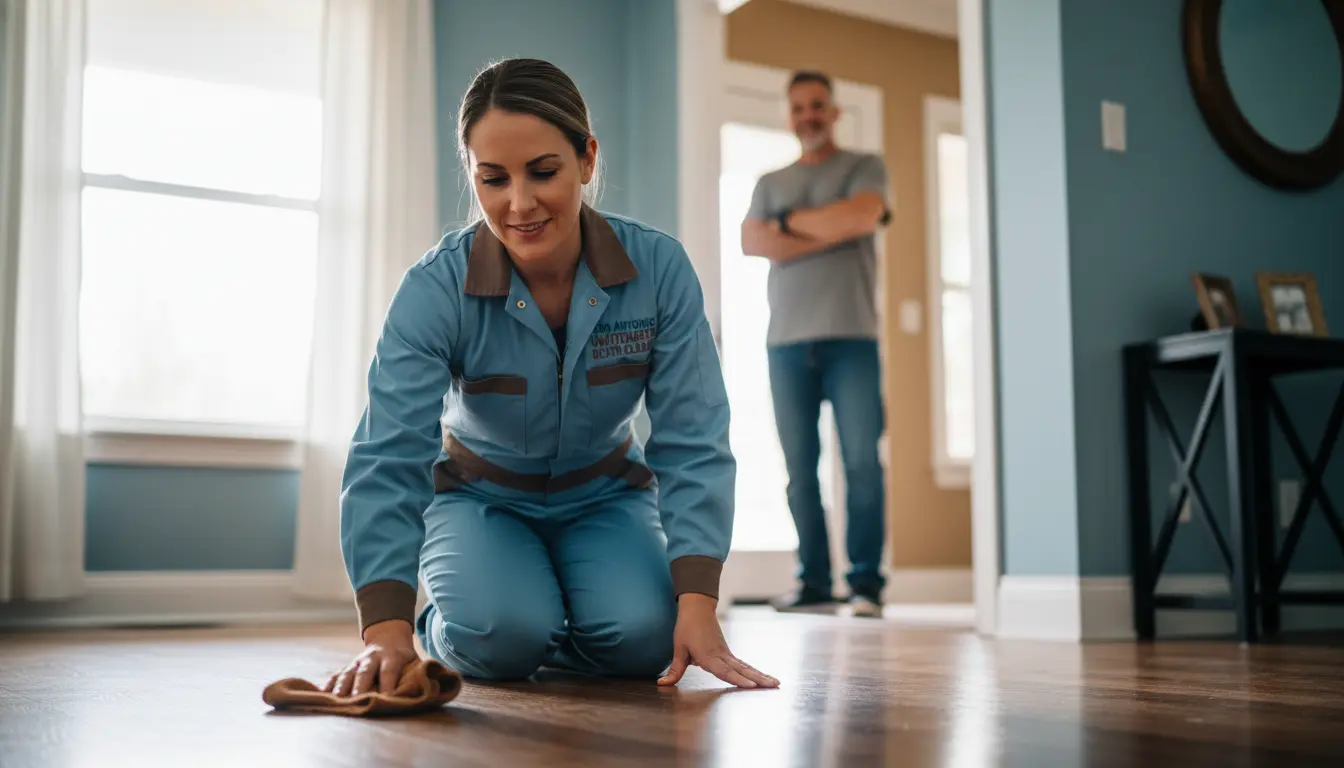
When you search for how to find discreet and compassionate cleanup services near me, you are likely standing in a situation that no one prepared you for. The property manager from Alamo Heights did what most people do: she called three general cleaning companies and one restoration franchise. Two of them refused the job on the spot. The third quoted a price that doubled after they saw the scene. The restoration franchise sent a crew with no bloodborne pathogen training and no industrial negative air equipment. That is not a criticism of those businesses. It is a reality of the industry. Unattended death cleanup sits in a narrow niche between law enforcement procedure, environmental health regulation, and trauma-informed customer service. The companies that do it well invest heavily in certifications like the IICRC S540 standard for trauma and crime scene cleanup. They carry specific insurance riders for biohazard transport. They understand the psychological weight of walking into a home where someone died alone and was not discovered for days or weeks.
This article walks through exactly what you need to look for when evaluating providers in San Antonio, from the technical steps of the remediation process to the pricing structures that reflect real costs. The goal is to give you a framework that separates competent specialists from generalists who are in over their heads.
Why Standard Cleaning Fails in Unattended Death Scenarios
The most common mistake property owners make is treating an unattended death scene like a deep cleaning project. A standard residential cleaner operates with mops, buckets, diluted bleach solutions, and HEPA vacuums rated for household dust. Those tools and methods are not designed to handle bloodborne pathogens such as hepatitis B, hepatitis C, HIV, or the bacterial load that develops during the decomposition process. The IICRC S540 standard explicitly states that trauma and crime scene cleanup requires the use of EPA-registered hospital-grade disinfectants with a specific dwell time — typically ten minutes of wet contact — to achieve viral inactivation. Standard cleaning products do not meet that threshold.
Beyond the disinfection gap, there is the issue of structural penetration. When biological fluids pool on porous surfaces like unfinished wood, drywall, grout, or unsealed concrete, capillary action pulls the fluid into the material. In San Antonio’s climate, where humidity levels often exceed 70 percent during the summer months, that moisture accelerates microbial growth inside walls and under flooring. A surface wipe-down leaves the contamination embedded in the substrate, where it continues to decompose and generate volatile organic compounds. Those VOCs are what cause the persistent odor that standard cleaners cannot remove. Professional remediation involves removing and replacing porous materials that have been saturated, followed by sealing the remaining structural elements with an encapsulant that traps any residual contaminants.
The Technical Remediation Process Step by Step
Every unattended death cleanup follows a structured workflow that integrates safety protocols from OSHA’s Bloodborne Pathogens Standard (29 CFR 1910.1030) with the containment and remediation procedures outlined in the IICRC S540 standard. Understanding this process helps you evaluate whether a provider is following industry best practices or cutting corners.
Initial Risk Assessment and Site Stabilization
The first step is a walkthrough with the remediation specialist to identify all affected areas, including hidden zones where fluids may have migrated. In the Alamo Heights duplex, the specialist used a moisture meter and a thermal imaging camera to detect fluid migration under the laminate flooring and into the base of the drywall. The assessment also identifies potential safety hazards such as sharps, drug paraphernalia, or structural instability caused by decomposition. This is also the stage where the crew establishes containment zones using polyethylene sheeting and negative air machines to prevent cross-contamination to unaffected parts of the property.
PPE Protocol and Engineering Controls
Technicians don full personal protective equipment, including Tyvek suits, nitrile gloves with cut-resistant liners, full-face respirators with P100 filters, and rubber boots. The purpose is twofold: protect the workers from exposure to bloodborne pathogens and prevent them from tracking contaminants out of the work zone. Negative air machines equipped with HEPA filters create a pressure differential that keeps airborne particles inside the containment area. In San Antonio, where high ambient heat can cause technicians to fatigue quickly, crews rotate in shifts and take hydration breaks in a designated clean zone to maintain safety compliance.
Physical Removal of Biohazardous Materials
This is the most labor-intensive phase. Technicians remove all visibly contaminated materials, including carpet, padding, laminate flooring, baseboards, sections of drywall, and any personal belongings that have been saturated. The removal depth depends on the material. For drywall, the industry standard is to cut at least twelve inches above the visible stain line to ensure no wicking has occurred higher up. For concrete, technicians may use an enzyme-based biological cleaner that breaks down organic matter at the molecular level, followed by mechanical agitation with a rotary scrubber. All removed materials are double-bagged in red biohazard bags and transported to a licensed disposal facility.
Chemical Disinfection and ATP Testing
After the physical removal, the crew applies an EPA-registered hospital-grade disinfectant to all surfaces. The chemical must remain wet for the full dwell time specified on the label — typically ten minutes — to achieve the required log reduction in pathogen load. After the dwell period, the technician uses an adenosine triphosphate (ATP) hygiene monitoring system to verify cleanliness. An ATP test measures the amount of organic residue on a surface by detecting the presence of adenosine triphosphate, a molecule found in all living cells. A reading below a specific threshold, usually 10 relative light units (RLU), indicates that the surface is biologically clean. This is the same testing protocol used in hospital operating rooms and commercial food processing facilities.
Structural Decontamination and Encapsulation
Once the surfaces are clean and verified, the crew applies an encapsulant or a sealant to any porous surfaces that were not removed. This step is critical for preventing future odor off-gassing. In the Alamo Heights duplex, the concrete slab was treated with a penetrating epoxy sealant that bonds to the substrate and locks in any residual contamination. For wooden subfloors, a shellac-based primer is used to seal the wood and block odor migration.
Final Verification and Documentation
The final phase includes a second ATP test on representative surfaces, a visual inspection under UV light to check for residual biological staining, and an odor assessment. The crew documents every step with photographs and a written report that includes the ATP readings, the chemicals used, and the disposal manifest. This documentation is important for insurance claims, property resale, and legal compliance.
Professional Remediation vs. Standard Cleaning: A Technical Comparison
The following table illustrates the key differences between professional biohazard remediation and standard residential cleaning. These differences are not academic — they directly affect the safety, habitability, and legal compliance of the property.
| Feature / Metric | Professional Biohazard Remediation | Standard Residential Cleaning |
|---|---|---|
| Regulatory Compliance | OSHA 29 CFR 1910.1030, IICRC S540, TCEQ medical waste disposal | No specific regulatory framework for biohazards |
| Pathogen Elimination | EPA-registered hospital-grade disinfectants with verified ATP testing (≤10 RLU) | Household bleach or diluted quaternary ammonium compounds; no verification |
| Structural Assessment | Thermal imaging, moisture meters, and destructive inspection to identify hidden contamination | Visual inspection only; hidden contamination is missed |
| Containment Protocol | Negative air pressure, polyethylene barriers, HEPA filtration | No containment; pathogens can spread to adjacent areas |
| Waste Disposal | Licensed medical waste transport and incineration with chain-of-custody manifest | General trash disposal (illegal for biohazard waste) |
| Odor Remediation | Removal of saturated materials, enzyme treatments, encapsulants, and hydroxyl generators | Masking agents or air fresheners; odor returns |
| Insurance Documentation | Detailed report with ATP readings, photographs, and disposal manifests | No documentation provided |
Source: IICRC S540 Trauma and Crime Scene Cleanup Standard
Expert Diagnostic Insights for Property Owners
Three advanced diagnostic observations that separate experienced remediation specialists from general contractors:
1. Hidden Biological Seepage in Porous Masonry
In San Antonio’s older neighborhoods, such as King William or Monte Vista, many homes have unsealed brick or limestone foundations. When biological fluids pool against these surfaces, they can wick into the masonry and into the interior wall cavity. A visual inspection will show no stain on the surface, but a moisture meter will detect elevated readings in the material. The remediation protocol for this scenario involves drilling weep holes into the mortar joints, flushing the cavity with an enzyme cleaner, and allowing it to dry under negative pressure before sealing. Property owners who skip this step often report recurring odor issues weeks after the initial cleanup.
2. Why Porous Materials Require Replacement, Not Cleaning
Many property owners ask whether carpet or upholstery can be steam-cleaned and saved. The answer is almost always no. Porous materials like carpet padding, unfinished wood, and drywall act as sponges for biological fluids. Once the fluid penetrates the material, it cannot be extracted completely through cleaning. The organic matter remains embedded, where it continues to decompose and produce volatile organic compounds. The IICRC S540 standard recommends removal and replacement of any porous material that has been in contact with blood or body fluids for more than a few minutes. Attempting to clean these materials often results in a false sense of safety and a lingering odor that eventually forces replacement anyway.
3. The Importance of Negative Pressure to Prevent Cross-Contamination
When biological fluids decompose, they release airborne bacteria and fungal spores. Without negative air pressure, these particles can travel through HVAC systems and into unaffected rooms. In a recent case in a San Antonio apartment complex, a standard cleaner used box fans to ventilate the unit after a death. The fans actually pulled contaminated air into the hallway and into three neighboring units, requiring those units to be remediated as well. Professional crews set up negative air machines with HEPA filtration before beginning any physical removal, creating a pressure gradient that pulls air from the clean zone into the contaminated zone and exhausts it through the filter. This engineering control is non-negotiable for preventing secondary contamination.
Common Mistakes Property Owners Make
- Using household bleach on biological matter: Household bleach (sodium hypochlorite at 5–6 percent concentration) is rapidly inactivated by organic matter. It also releases toxic fumes when mixed with other chemicals. Professionals use EPA-registered disinfectants that remain active in the presence of organic soil and that meet the OSHA bloodborne pathogens standard.
- Waiting for the odor to dissipate naturally: Odor from decomposition is caused by volatile organic compounds produced by bacterial activity. These compounds do not dissipate on their own. They adsorb into porous materials and continue to off-gas for weeks or months. By the time the odor is noticeable in adjacent rooms, the contamination has already spread.
- Allowing untrained personnel into the site: Family members, landlords, or real estate agents often enter the scene before remediation begins. This creates a risk of cross-contamination and exposes individuals to bloodborne pathogens without the protection of proper PPE. It also complicates the insurance claim process if the scene has been disturbed.
Pricing Structures for Unattended Death Cleanup
Pricing for professional biohazard remediation varies based on several factors, but understanding the typical cost components helps you evaluate quotes accurately.
- Site mobilization fee: Most providers charge a flat fee for the initial assessment, containment setup, and equipment deployment. In San Antonio, this fee typically ranges from $350 to $650, depending on the distance from the provider’s base and the complexity of the access.
- Hourly remediation rate: The labor component is usually billed hourly, with rates between $150 and $250 per technician per hour. A standard unattended death cleanup requires a team of three to four technicians working for four to eight hours, depending on the size of the scene and the degree of decomposition.
- Material disposal costs: Biohazard waste disposal is billed by the pound or by the bag. Typical costs range from $50 to $150 per bag, and a moderate scene may generate four to eight bags of waste. This includes the cost of incineration and the chain-of-custody documentation.
Three primary factors that influence the total cost:
- Extent of structural material replacement: If the contamination has saturated subflooring, drywall, or cabinetry, the cost of demolition, removal, and replacement can add $2,000 to $8,000 to the total project. Properties in older San Antonio neighborhoods with plaster walls or hardwood floors often require more extensive replacement because the materials are more porous and harder to seal.
- Total volume of biohazardous waste: A death that went undiscovered for several weeks in the summer will generate significantly more waste than one discovered within 24 hours. Decomposition fluids saturate a larger area, and the odor permeates more surfaces, requiring more extensive removal.
- Necessity for specialized HVAC decontamination: If the HVAC system has circulated contaminated air through the ductwork, the ducts must be cleaned and disinfected by a certified NADCA (National Air Duct Cleaners Association) specialist. This can add $800 to $2,500 to the total cost.
Safety Standards and Certifications That Matter
When evaluating a cleanup provider, ask for specific certifications and training documentation. The three most important credentials in the industry are the IICRC S540 certification for trauma and crime scene remediation, the OSHA Bloodborne Pathogens Standard training certificate (29 CFR 1910.1030), and the Texas Commission on Environmental Quality permit for medical waste transport. A provider who cannot produce these documents should not be considered for the job.
The IICRC S540 standard is the industry benchmark for trauma and crime scene cleanup. It covers everything from initial assessment and containment to waste disposal and final verification. Technicians who hold this certification have passed a written exam and demonstrated practical competence in the field. The OSHA Bloodborne Pathogens Standard training ensures that workers understand the routes of exposure, the proper use of PPE, and the emergency procedures for an exposure incident. The TCEQ permit ensures that the biohazard waste is handled in compliance with Texas state regulations and disposed of at an authorized facility.
Beyond certifications, look for providers who carry specific insurance policies. General liability insurance does not cover biohazard cleanup. The provider should have pollution liability insurance and workers’ compensation insurance that specifically covers bloodborne pathogen exposure. Ask for a certificate of insurance and verify the coverage limits with the issuing agency.
Frequently Asked Questions About Unattended Death Cleanup
Can I clean an unattended death scene myself to save money?
Technically, you can attempt it, but doing so exposes you to significant health risks and legal liabilities. Bloodborne pathogens such as hepatitis B, hepatitis C, and HIV can survive outside the body for days or weeks, depending on the surface and environmental conditions. Decomposition fluids also contain bacterial endotoxins that can cause respiratory illness and skin infections. Without proper PPE, negative air containment, and EPA-registered disinfectants, you cannot achieve the level of decontamination required to make the space safe for occupancy. Additionally, Texas law requires that biohazardous waste be disposed of through a licensed medical waste facility. Improper disposal can result in fines from the TCEQ and potential liability if a waste hauler or sanitation worker is exposed.
How quickly should I schedule cleanup after a death is discovered?
Ideally, remediation should begin within 24 to 48 hours of the body being removed by the coroner or medical examiner. The longer you wait, the more time decomposition fluids have to wick into porous materials and spread through the structure. In San Antonio’s summer heat, the biological process accelerates significantly. A scene that is left for a week can require twice the labor and material replacement compared to one addressed within two days. Prompt action also reduces the risk of odor migrating into adjacent units or attracting pests.
Will my homeowners insurance cover the cost of unattended death cleanup?
Many standard homeowners insurance policies and rental property insurance policies cover biohazard cleanup under the dwelling coverage or the personal property coverage, especially if the death was sudden and unexpected. However, policies vary widely. Some require a specific rider for biohazard or crime scene cleanup. It is essential to contact your insurance agent as soon as possible and ask about coverage limits and claim procedures. Professional remediation companies typically provide the documentation needed to support an insurance claim, including detailed reports, photographs, ATP test results, and disposal manifests. Working with a provider who offers insurance claim assistance can simplify the process and increase the likelihood of full reimbursement.
What happens to personal belongings that are not contaminated?
Belongings in unaffected areas of the property can be cleaned and returned to the owner or the estate. Professional remediation crews perform a content damage assessment to determine which items are salvageable and which must be discarded. Items that are within the contaminated zone but not directly saturated can often be cleaned using a combination of dry fogging with a hospital-grade disinfectant and HEPA vacuuming. Porous items such as mattresses, upholstered furniture, and carpeting in the immediate vicinity of the death are usually discarded because they cannot be fully decontaminated. The crew will document the condition of every item and provide a written inventory for insurance purposes.
Professional Biohazard Remediation in San Antonio
Finding a discreet and compassionate cleanup service near you requires more than a quick online search. It requires evaluating the provider’s technical qualifications, their understanding of local environmental conditions, and their ability to handle the emotional weight of the situation with professionalism. The right team will arrive with IICRC-certified technicians, industrial-grade equipment, and a protocol that prioritizes safety, thoroughness, and respect for the property and the people affected by the loss.
San Antonio Unattended death cleanup has built its reputation on exactly this standard. Every technician completes rigorous training in bloodborne pathogen safety, structural decontamination, and trauma-informed communication. The company maintains a fleet of vehicles equipped with negative air machines, HEPA filtration units, ATP hygiene monitoring systems, and a full inventory of EPA-registered disinfectants. They work closely with Bexar County law enforcement, property managers, and insurance adjusters to ensure that every cleanup is handled efficiently, discreetly, and in full compliance with all applicable regulations.