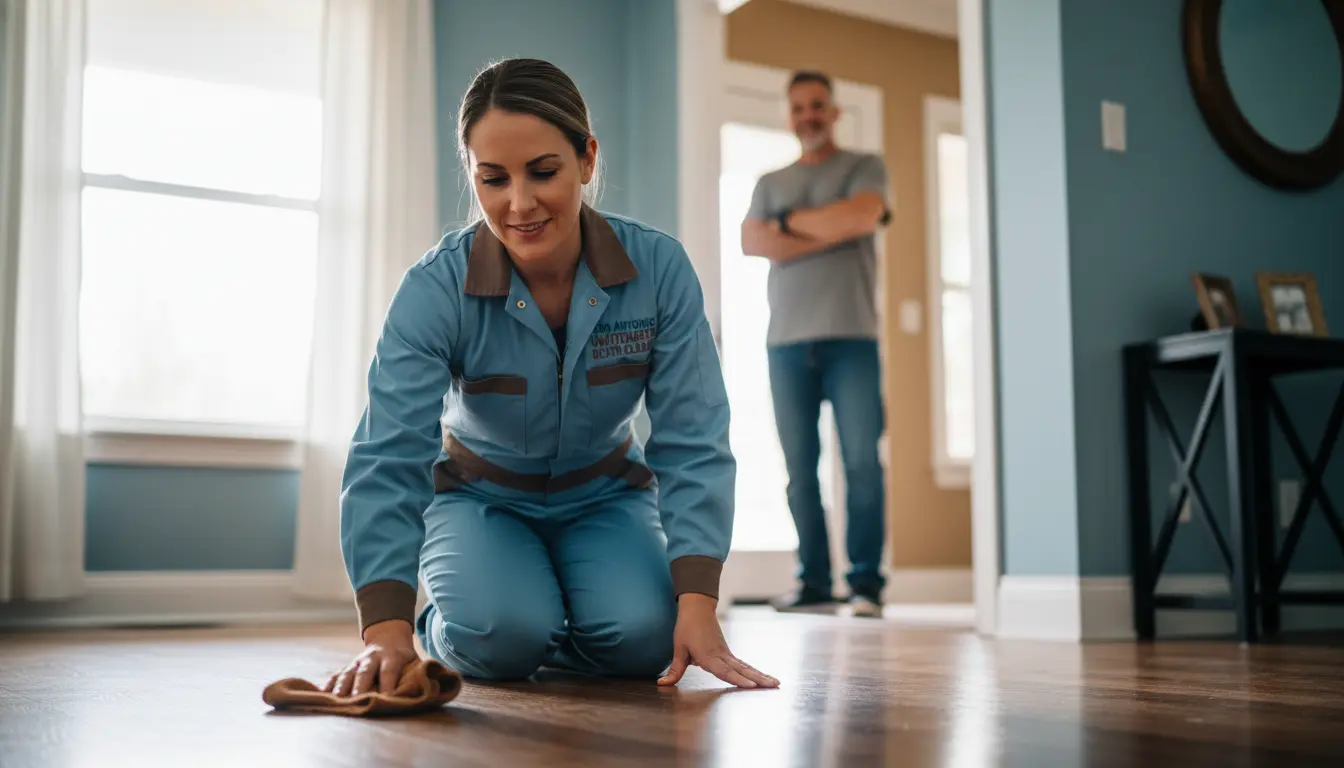
Unattended death cleanup services near Medical Center neighborhoods serve a distinct purpose that goes far beyond surface cleaning. When a death goes undiscovered for days or weeks, the body releases a cascade of biological fluids, enzymes, and gases that saturate porous building materials, compromise indoor air quality, and create an environment where dangerous pathogens thrive. The professionals who respond to these scenes are not general cleaners. They are certified biohazard remediation specialists trained under the IICRC S540 standard, equipped with industrial-grade tools, and bound by strict OSHA regulations. Their job is to restore the property to a safe, habitable condition while handling every step with the discretion and compassion that families in crisis deserve.
For residents, property managers, and real estate professionals operating near the Medical Center — an area dense with older homes, multifamily units, and high turnover rental properties — understanding what professional unattended death remediation actually entails can mean the difference between a successful restoration and a long-term liability. This article walks through the technical process, the regulatory landscape, the realistic costs, and the common mistakes that property owners make when they try to handle biohazard situations on their own. It also explains why San Antonio Unattended death cleanup is the most practical, highly-trained provider for this specialized work in Bexar County.
The Technical Workflow of Professional Unattended Death Remediation
Every unattended death scene is unique, but the remediation process follows a structured, science-based workflow designed to eliminate biohazards, prevent cross-contamination, and restore the structural integrity of the affected area. The first step is always a thorough risk assessment. The lead technician evaluates the scene to determine the scope of contamination, the type of biological materials present, and the condition of the building materials. In San Antonio, where summer temperatures routinely exceed 95 degrees and humidity levels accelerate microbial growth, the assessment must also account for how long the death went undiscovered. A scene that has been active for ten days is fundamentally different from one that has been active for ten hours, and the remediation strategy adjusts accordingly.
Once the assessment is complete, the team establishes a containment zone using polyethylene sheeting and negative air machines. These machines create a pressure differential that keeps airborne contaminants from migrating into unaffected areas of the property. This is a critical step that standard cleaning crews never perform. Without negative pressure, biological aerosols can travel through HVAC systems, infiltrate wall cavities, and settle in ducts, turning a localized problem into a whole-home contamination event. The team then dons full personal protective equipment — Tyvek suits, N95 or higher respirators, face shields, and chemical-resistant gloves — before any physical removal begins.
Physical removal involves the careful extraction of all biohazardous materials, including blood, bodily fluids, and any porous items that have been saturated. Carpets, padding, drywall, insulation, and baseboards are typically removed and disposed of in accordance with local and federal biohazard waste regulations. In the Medical Center area, many homes were built in the 1960s and 1970s, meaning subfloor materials are often plywood rather than concrete. Plywood absorbs fluids deeply, and simply cleaning the surface is not sufficient. The team must assess whether the subfloor can be decontaminated or whether it requires full replacement. This judgment call is one of the reasons why experience and certification matter. The wrong decision can leave behind lingering bio-contamination that leads to persistent odors, mold growth, and health risks for future occupants.
Professional Biohazard Remediation vs. Standard Janitorial Cleaning
One of the most dangerous misconceptions property owners hold is that a general cleaning service can handle the aftermath of an unattended death. The comparison below highlights the critical differences between professional remediation and what a standard cleaning crew can — and cannot — do.
| Feature / Metric | Professional Biohazard Remediation | Standard Residential Cleaning |
|---|---|---|
| Regulatory Compliance | OSHA 29 CFR 1910.1030, IICRC S540, EPA waste disposal regulations | No applicable biohazard standards |
| Pathogen Elimination | EPA-registered hospital-grade disinfectants with verified kill times; ATP testing for validation | Household bleach or all-purpose cleaners; no efficacy testing |
| Structural Assessment | Evaluates subfloor, drywall, and insulation for saturation; recommends replacement when necessary | Cleans visible surfaces only; does not assess underlying materials |
| Cross-Contamination Prevention | Negative air machines, containment barriers, HEPA filtration | No containment protocols; risk of spreading contaminants |
| Waste Disposal | Segregation, labeling, and transport to licensed biohazard waste facilities | No specialized disposal; often placed in household trash |
| Odor Neutralization | Ozone, hydroxyl, or thermal fogging at molecular level | Air fresheners or surface sprays that mask odors temporarily |
| Insurance Documentation | Photographic record, chain of custody, and detailed invoices for claims | General receipt; not accepted for biohazard claims |
This table makes the gap unmistakable. Standard cleaning services are simply not equipped, trained, or legally authorized to manage biohazard materials. Property owners who hire them expose themselves to liability, health risks, and the very real possibility that insurance will deny the claim due to improper handling. Professional remediation, on the other hand, is a regulated, documented, and scientifically grounded process that protects everyone involved.
Advanced Diagnostic Insights from the Field
Over years of responding to scenes across San Antonio, experienced technicians develop a set of diagnostic skills that textbooks alone cannot teach. These insights are what separate a thorough remediation from one that leaves hidden problems behind. First, there is the issue of hidden biological seepage. When a body decomposes on a carpet, gravity pulls fluids downward into the padding and then into the subfloor. But fluids also wick horizontally through the carpet fibers. A technician who only cuts out the visibly stained section often misses the leading edge of the contamination. The standard protocol is to cut a generous margin around any visible staining — typically 18 to 24 inches — and then inspect the subfloor underneath that entire area using a moisture meter. If the meter registers elevated moisture levels beyond the stain, the subfloor must be removed or treated with an enzyme-based cleaner that breaks down organic matter at a molecular level.
The second diagnostic insight involves porous materials. Many property owners assume that if a wall looks clean, it is safe. In reality, drywall acts like a sponge. If biological fluids have contacted the surface, they can soak into the gypsum core and the paper facing. Cleaning the paint side does nothing to address the contamination inside. The IICRC S540 standard is explicit: drywall that has been saturated by body fluids or decomposition fluids must be removed and replaced. Attempting to clean it in place leaves behind proteins that can support bacterial growth and produce persistent odors. The same principle applies to wood, carpet padding, and certain types of insulation. In the Medical Center area, where many homes have original hardwood floors beneath carpet, technicians must be especially careful. Cleaning the carpet without addressing the subfloor can ruin the hardwood and create a perfect environment for microbial remediation challenges down the road.
Common Mistakes Property Owners Make
The most frequent error property owners make is reaching for household bleach. Bleach is a disinfectant under specific conditions, but it is ineffective against biological matter once the organic load is high. Blood and tissue fluids contain proteins that bind with the active chlorine in bleach, neutralizing it before it can kill pathogens. What actually happens is that the bleach bleaches the stain visually while leaving the underlying contamination intact. A surface may look clean to the naked eye but still harbor viable hepatitis B or C viruses. Professionals use disinfectants that remain active in the presence of organic load, and they apply them at the correct concentration and dwell time — typically ten minutes of contact.
The second mistake is waiting for the odor to dissipate naturally. Decomposition odors are caused by volatile organic compounds that do not simply evaporate. They adsorb into porous surfaces, and as temperatures rise — which they do daily in San Antonio — the VOCs are released back into the air. A room that smells tolerable at 6 AM can become overwhelming by 2 PM when the afternoon heat peaks. Waiting does not solve the problem. It only allows the biological material to continue breaking down, accelerating the damage to the structure. By the time a property owner calls for professional help, the remediation is often more extensive — and more expensive — than it would have been if they had called immediately.
Understanding the Cost of Unattended Death Cleanup
- Standard mobilization fee: Most professional remediation companies charge a mobilization fee that covers the arrival of a certified team, setup of containment and negative air equipment, and initial risk assessment. In San Antonio, this typically ranges from $300 to $600 depending on the time of day and response urgency.
- Hourly remediation rates: The hands-on cleaning work is usually billed on an hourly basis, with rates for certified technicians ranging from $125 to $250 per hour. The total number of hours depends on the square footage of the affected area, the depth of contamination, and the number of materials that must be removed and replaced.
- Specialized biohazard waste disposal: Disposal of blood-soaked materials, removed drywall, carpet, and personal protective equipment is not free. Licensed biomedical waste facilities charge by weight. A moderate scene can generate 100 to 400 pounds of waste, adding $200 to $800 to the total cost.
Safety Standards and Regulatory Compliance
Safety in unattended death cleanup is not optional. It is enforced by specific federal and industry regulations that every professional provider must follow. The OSHA Bloodborne Pathogens Standard, 29 CFR 1910.1030, requires employers to implement a written exposure control plan, provide appropriate PPE, offer hepatitis B vaccinations to at-risk employees, and follow strict decontamination procedures. Any company that advertises biohazard cleanup but cannot produce an OSHA-compliant exposure control plan should not be hired. Compliance with this standard is the baseline for safe operation.
The IICRC S540 standard goes further by establishing specific protocols for trauma and crime scene cleanup. It covers everything from site assessment and containment to cleaning validation and final clearance testing. Technicians who hold IICRC certifications in trauma remediation have passed exams on these protocols and are required to stay current through continuing education. When a property owner hires a company that follows the S540 standard, they are getting a guarantee that the work meets a nationally recognized benchmark. This is especially important for insurance claims, because many carriers require proof that the remediation was performed according to the S540 standard before they release funds.
Frequently Asked Questions About Unattended Death Cleanup
Is it safe to stay in the home during the remediation process?
For the safety of all occupants, the affected area must be isolated and kept under negative pressure throughout the cleanup. If the property has a separate living space that is not connected to the containment zone through shared HVAC ducts, it may be possible to remain in the home. However, in most cases — particularly in the tight floor plans common to Medical Center neighborhoods — the entire property is best vacated until remediation and final ATP testing are complete. The risk of cross-contamination and exposure to airborne biological particles is simply too high to justify allowing anyone without full PPE inside the containment area.
How quickly does decomposition accelerate in San Antonio’s climate?
Biological decomposition is highly temperature- and humidity-dependent. In San Antonio, where ambient summer temperatures often exceed 95 degrees and relative humidity stays above 60 percent, the process accelerates dramatically. A body that would take two weeks to reach advanced decomposition in a cooler, drier climate can reach the same stage in four to five days in the South Texas summer. This accelerated timeline means that fluids and gases begin saturating building materials much sooner, and the window for successful remediation narrows. Property owners in the Medical Center area should understand that every hour of delay increases the scope of contamination and the cost of restoration.
Will my homeowner’s insurance cover unattended death cleanup?
Most standard homeowner’s insurance policies include coverage for biohazard remediation under the dwelling protection or personal property coverage, provided the damage is sudden and accidental. Death itself is not always considered sudden from an insurance perspective, but the resulting contamination is typically covered. The key is to file the claim promptly and to use a remediation provider that documents every step with photographs, material inventory, and ATP test results. Many property owners find that their claim is approved faster when they work with a company experienced in insurance claim assistance. It is always advisable to review your specific policy with your agent.
Can cleaning up after an unattended death be DIY?
From a regulatory and safety standpoint, DIY cleanup of an unattended death is strongly discouraged and, in many jurisdictions, illegal if the waste is not disposed of properly. The biological materials involved are classified as regulated medical waste under federal and state law. Handling them without proper training, PPE, and disposal protocols exposes the individual to bloodborne pathogens, airborne contaminants, and legal liability for improper waste disposal. Furthermore, without the technical tools and disinfection validation methods used by professionals, there is no way to confirm that the property is actually safe. The risks far outweigh any potential cost savings.
Professional Biohazard Remediation in San Antonio
Unattended death is a difficult reality that property owners in the Medical Center neighborhoods may face at some point. When it happens, the focus should be on protecting the health of everyone who will occupy the space in the future and on restoring the property to a condition that supports peace of mind. Professional unattended death cleanup services near Medical Center neighborhoods offer a specialized, science-driven response that standard cleaning cannot match. Every step — from containment and removal to disinfection and clearance testing — follows established protocols designed to eliminate hazards and prevent long-term damage.