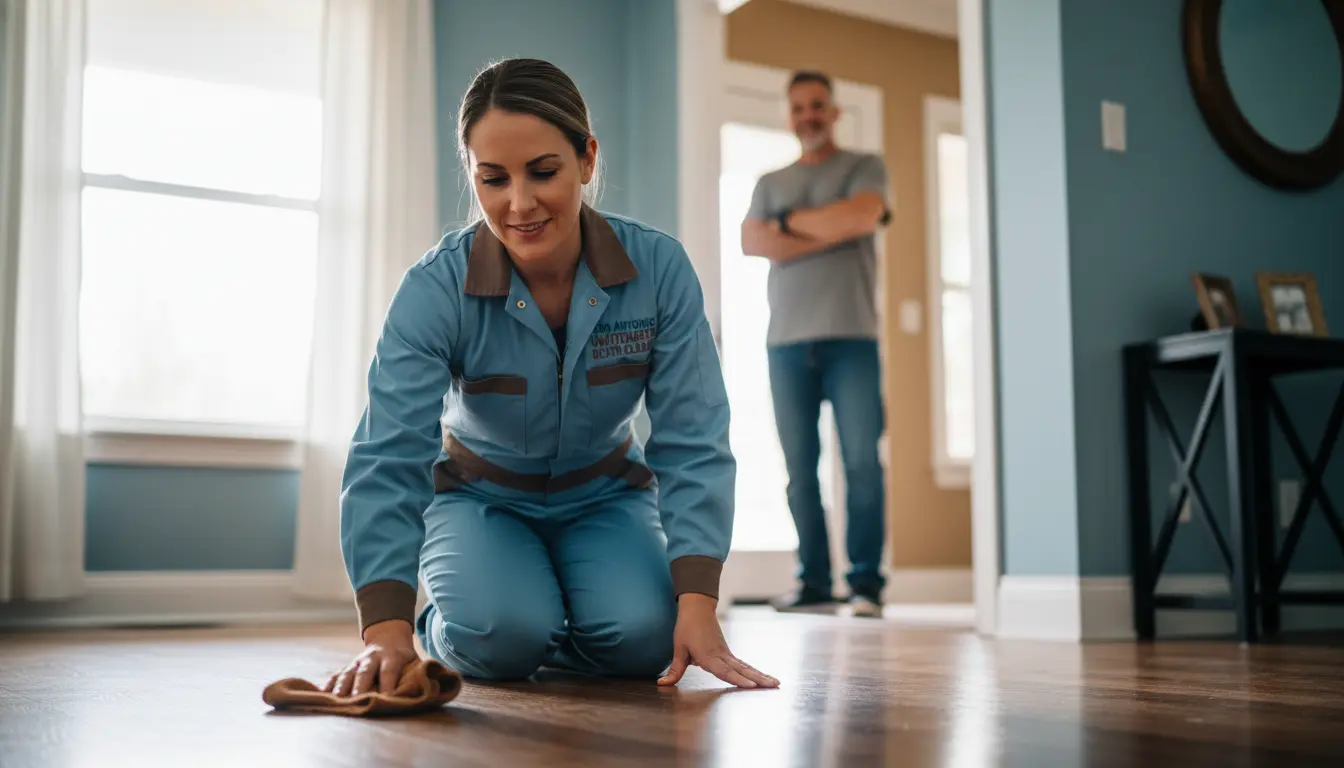
The technician stepped into the living room of a quiet bungalow on the north side of San Antonio and immediately raised a hand to stop the family member who was about to follow. The air was thick and heavy, carrying a specific, biochemical signature that no amount of air freshener could mask. He had seen this scene before — weeks of silence, a missed wellness check, and now a scene that had entered the advanced stages of decomposition.
The lesson is stark but necessary: unattended death cleanup is not a form of janitorial work. It is an advanced biohazard remediation process that requires specialized equipment, rigorous methodology, and strict regulatory compliance. In a city like San Antonio, where summer temperatures regularly exceed 95 degrees and humidity from the Gulf accelerates biological breakdown, the margin for error is dangerously thin. Understanding why specialized equipment is used during unattended death cleanup is the first step toward protecting both property and the people who will occupy it afterward.
Why Specialized Equipment Is Critical For Unattended Death Cleanup In San Antonio
The environment inside a home where a death has gone undetected for days or weeks is fundamentally different from a mere spill or mess. The human body begins to break down almost immediately after death, releasing a complex mixture of fluids, gases, and airborne particulates. In South Texas, the combination of high heat and elevated moisture levels accelerates this process, meaning that a scene that might be manageable after three days in a cooler climate can become a full-blown biological hazard in less than 48 hours here.
The Biological And Environmental Hazards That Drive Equipment Needs
Decomposition Byproducts And Airborne Contamination
As tissues break down, they release amines, sulfur compounds, and volatile organic compounds that don’t just smell unpleasant — they are chemically active. These substances can permeate drywall, seep into hardwood flooring, and become trapped in HVAC ductwork. Specialized equipment like negative air machines and HEPA-filtered air scrubbers are deployed to create negative pressure zones that prevent these contaminated particles from migrating to unaffected areas of the home.
In San Antonio, many homes were built before modern vapor barrier standards, particularly in older neighborhoods like Alamo Heights and around the historic district. These structures often have crawl spaces and sub-flooring that can trap biological seepage. Without professional-grade thermal imaging and moisture detection tools, this hidden contamination may remain undetected, leading to persistent odor and long-term microbial growth that can compromise indoor air quality for years.
Bloodborne Pathogen Risks And Cross-Contamination Prevention
Blood is not just a fluid that wipes up; it is a carrier of serious infectious diseases. When blood dries or is absorbed by porous materials like carpet or upholstery, the pathogens can remain viable for days or even weeks under the right conditions. Specialized equipment used during unattended death cleanup includes EPA-registered hospital-grade disinfectants that are tested specifically for their efficacy against bloodborne pathogens, as well as industrial-grade sprayers that ensure even application across all surfaces.
Professional Remediation Vs. Standard Cleaning: A Technical Comparison
| Feature/Metric | Professional Biohazard Remediation | Standard Residential Cleaning |
|---|---|---|
| Regulatory Compliance | Adheres to OSHA 29 CFR 1910.1030, IICRC S540, and local Bexar County waste disposal regulations | No formal regulatory oversight for biological hazards |
| Pathogen Elimination | Uses EPA-registered hospital-grade disinfectants with verified contact times; ATP testing for verification | General household cleaners with no demonstrated pathogen kill claims |
| Structural Assessment | Thermal imaging, moisture meters, and visual inspection for hidden seepage; sub-floor removal as needed | Visual surface inspection only |
| Air Quality Management | Negative air machines with HEPA filtration to contain airborne particulates | Standard ventilation or air fresheners |
| Waste Disposal | Segregation, labeling, and transport to authorized medical waste incineration facilities in Texas | Standard trash pickup (illegal for biohazardous material) |
Source: IICRC S540 Trauma and Crime Scene Cleanup Standard
Expert Insights: What The Pros Know About Hidden Dangers
Diagnostic Tip 1: Biological Seepage Detection
One of the most underappreciated skills in this field is the ability to detect seepage that has traveled along joists or under baseboards, often several feet from the original source. Professional technicians use moisture meters with penetrating probes and thermal imaging cameras to map out affected areas that would be invisible to the naked eye. In San Antonio, where many homes sit on concrete slab foundations, this seepage can soak porous materials like particleboard subflooring or drywall, requiring removal far beyond the visible stain.
Diagnostic Tip 2: Porous Material Replacement vs. Cleaning
There is a common misconception that any surface can be cleaned. In unattended death cleanup, porous materials like unsealed hardwood, carpet, padding, drywall, and insulation that have come into contact with body fluids or decomposition byproducts must be removed and replaced. Cleaning these materials is not only ineffective but dangerous, as the contaminants remain trapped and can re-emerge over time. The equipment used for this removal includes HEPA-filtered vacuums and sealed containment barriers to prevent dust and particulate spread during demolition.
Diagnostic Tip 3: Negative Pressure To Prevent Cross-Contamination
The use of negative air pressure is not an optional precaution — it is a mandatory protocol. By creating a lower pressure environment inside the affected room compared to the surrounding home, these machines ensure that all airborne contaminants are drawn into the filtration system rather than migrating to clean spaces. This is especially critical in apartment complexes, condos, or homes with shared ventilation systems, which are common in areas like Universal City and Live Oak.
Common Mistakes Property Owners Make
Many families, driven by a desire to handle things privately or save money, attempt to clean the scene themselves. The first error is using household bleach on biological matter. While bleach is a disinfectant in dilute form, it is rapidly neutralized by organic material, meaning it fails to disinfect effectively on blood or tissue. The second mistake is waiting for the odor to dissipate naturally. Odor is caused by volatile organic compounds that adhere to surfaces; simply opening windows does nothing to remove the source. The third is allowing untrained family members or even general contractors into the site before remediation, exposing them to serious health risks and potentially contaminating other parts of the property.
Understanding The Costs: Factors That Shape Pricing In San Antonio
- Standard site mobilization fees — These cover the cost of dispatching a fully equipped team, transport of specialized equipment, and the initial risk assessment. In San Antonio, these fees typically range based on distance and the complexity of the site.
- Structural material replacement — The most significant cost driver. If subflooring, drywall, or insulation must be removed and replaced, the price rises accordingly. The extent of this is determined by the duration of exposure and local humidity conditions.
- Total volume of biohazardous waste — Disposal of biological waste is heavily regulated in Texas. The weight and volume directly affect transport and incineration costs. A single unattended death can produce anywhere from 50 to 200 pounds of regulated medical waste.
- Specialized HVAC decontamination — When decomposition byproducts have entered the ductwork, thorough cleaning and fogging with antimicrobial agents are required. This is a labor-intensive process that adds to the overall project timeline.
Safety Standards And Certifications That Govern The Work
Unattended death cleanup is not an unregulated activity. Technicians operating in this field must have training under OSHA’s Bloodborne Pathogens Standard (29 CFR 1910.1030) and hold certifications from the IICRC in trauma and crime scene remediation. These standards govern everything from the selection of personal protective equipment (PPE) — which includes Tyvek suits, N-95 or PAPR respirators, and chemical-resistant gloves — to the protocols for waste segregation and transport.
In Bexar County, additional regulations apply to the disposal of biohazardous waste. It cannot be placed in standard trash receptacles or brought to regular landfills. Authorized medical waste transport companies must be used, and the chain of custody must be documented to ensure compliance with state law. These requirements are not bureaucratic formalities; they are designed to protect sanitation workers, the environment, and the public from exposure to infectious materials.
For property owners, understanding these standards provides assurance that the work is being performed to the highest safety level. A provider that openly references their IICRC certification and OSHA compliance is demonstrating a commitment to protocols that go far beyond what standard cleaning services offer.
Frequently Asked Questions About Unattended Death Remediation
What does specialized equipment include beyond basic cleaning tools?
Specialized equipment includes industrial-grade negative air machines that create a controlled environment to prevent airborne pathogen spread, HEPA-filtered vacuums that capture particulates as small as 0.3 microns, and EPA-registered electrostatic sprayers that ensure even coverage of disinfectants on all surfaces. Additionally, tools like thermal imaging cameras and moisture meters detect contamination that has seeped into hidden areas.
Why is household bleach not recommended for cleaning biological hazards?
Household bleach is rapidly neutralized by organic matter, meaning it loses its disinfecting ability when applied to blood or tissue. It also does not effectively penetrate porous surfaces. Professional-grade disinfectants are specifically formulated to maintain efficacy in the presence of organic load and are tested against specific bloodborne pathogens.
Can unattended death cleanup affect the resale value of a property in San Antonio?
Yes, but the impact depends on whether the cleanup is performed to professional standards. Incomplete or poorly executed cleanup can leave behind lingering odors, microbial growth, or invisible contamination that affects indoor air quality. A comprehensive remediation process that includes structural decontamination, odor removal, and third-party verification through ATP testing can restore the property to a safe and marketable condition.
How long does the remediation process typically take?
The timeline varies based on the extent of contamination. A straightforward case with minimal seepage and no structural material removal might take six to eight hours. Scenes requiring extensive demolition, sub-floor replacement, or HVAC decontamination can span multiple days. The team at San Antonio Unattended Death Cleanup provides a timeline estimate after the initial assessment.
Is it safe for family members to be present during the cleanup?
No. The remediation site is a designated biohazard zone. Only trained personnel wearing appropriate PPE should be present during active work. Family members are advised to remain outside the containment area until the process is complete and the space has been verified as safe via ATP testing.
Professional Biohazard Remediation In San Antonio
When an unattended death occurs, the aftermath extends far beyond emotional grief. The physical space itself requires technically rigorous, compassionate, and discreet handling to ensure that it is returned to a safe condition. The reasons why specialized equipment is used during unattended death cleanup are grounded in science, regulation, and respect for the families who must move forward.
San Antonio Unattended Death Cleanup offers the full spectrum of services — from initial assessment and containment to final verification through adenosine triphosphate testing, ensuring that all biological contaminants have been eliminated. We operate in compliance with IICRC S540 and OSHA standards, and our team is equipped to handle the unique challenges posed by South Texas’s environmental conditions. If you are facing this situation, know that help is available. Contact us to discuss your circumstances and receive a clear, professional path forward.