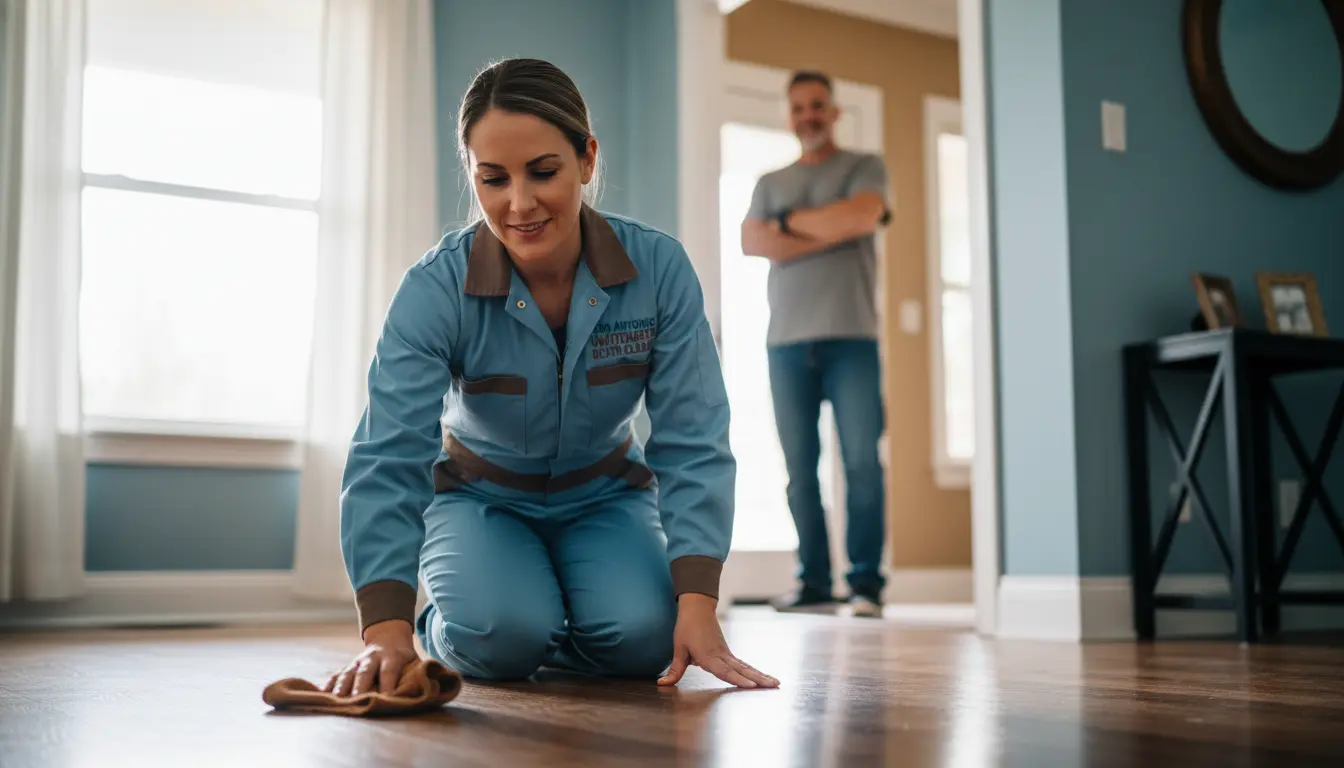
The widely held belief that bleach is the ultimate answer to biological contamination is not only incorrect—it is dangerous. In the context of a San Antonio property requiring restoration after a biohazard event, reaching for a common household cleaner can create a false sense of safety while leaving behind pathogens that pose long-term health risks. The reality is that restoring a property after a biohazard event is a complex, scientifically rigorous process that demands specialized training, industrial-grade equipment, and an understanding of how South Texas’s unique environmental conditions affect biological matter. A simple wipe-down does not eliminate bloodborne pathogens or the volatile organic compounds that seep into porous materials; it only spreads them further, making the scene more hazardous for everyone who enters.
This misunderstanding often leads property owners to attempt a quick fix, delaying the call for professional help and allowing contaminants to migrate deeper into structural elements. In the San Antonio metropolitan area, where the I-35 corridor funnels urban heat and the humidity profiles of Bexar County accelerate microbial growth, the window for safe, effective intervention is narrow. Every hour that passes after a trauma, unattended death, or hoarding situation compounds the physical damage and the health risk to occupants. This step-by-step guide to restoring a property after a biohazard event is designed to clarify what must happen—from initial containment to final clearance testing—so that you can make informed decisions about your property’s safety and livability.
Initial Risk Assessment and Scene Stabilization
Before any cleaning begins, a certified technician must evaluate the scene to identify all hazards. This goes beyond what the naked eye can see. In a typical unattended death scenario in San Antonio, the combination of high ambient heat and poor ventilation can lead to rapid decomposition, which releases airborne biological particles and volatile organic compounds. The first step involves establishing a perimeter, using negative air machines to create a pressure differential that prevents contaminants from spreading to unaffected areas of the structure. This is a critical component of cross-contamination prevention and must be done before any physical contact with the affected materials occurs.
During this phase, the technician also assesses the type of biological matter present—blood, bodily fluids, tissue, or microbial growth—and determines the appropriate level of personal protective equipment (PPE). For a typical trauma scene, this includes full-body Tyvek suits, N100 or P100 respirators, double layers of nitrile gloves, and chemical-resistant boots. The assessment also includes a survey of the building’s construction: whether the sub-flooring is plywood or concrete, whether the walls are drywall or plaster, and whether the HVAC system is connected to the affected rooms. All of this data informs the remediation plan and helps us estimate the scope of work, including the need for structural decontamination or material replacement.
Physical Removal of Biohazardous Materials
Once the scene is stabilized and all hazards are identified, the physical removal process begins. This step is often the most emotionally difficult for property owners, but it is also the most technically demanding. All visibly contaminated materials—including carpet, padding, upholstery, drywall, insulation, and any porous items that cannot be fully cleaned—must be removed and disposed of as regulated medical waste. In San Antonio, this waste is transported by licensed haulers to authorized treatment facilities, in compliance with state and federal guidelines. Using standard trash services for biohazardous waste is illegal and would expose the property owner to significant liability.
The removal process is methodical. Technicians work from the least-contaminated areas toward the most heavily impacted zone, using separate tools and disposable materials for each section to prevent cross-contamination. Each piece of removed material is double-bagged in six-mil biohazard bags, labeled, and staged for pickup. For a typical unattended death scene in a bedroom or bathroom, this can mean removing several cubic yards of material. In hoarding situations, the volume is often multiplied, requiring a coordinated effort between our team and professional organizers for personal property sorting after the hazardous materials are cleared.
Why Bleach Fails in Biohazard Remediation
Household bleach is a common first response, but it is ineffective against biological matter for several reasons. First, bleach is rapidly deactivated by organic material; when it contacts blood or tissue, the chlorine reacts with the proteins and loses its disinfecting power almost immediately. This means the underlying surface is not actually sanitized. Second, bleach does not penetrate porous materials like wood or drywall. It sits on the surface, leaving the deep layers of contamination untouched. Over time, those layers can become a breeding ground for bacteria and mold, especially in San Antonio’s humid climate. Professional remediation uses enzyme-based cleaners and oxidizing agents that can seep into porous substrates and break down organic material from the inside out.
The Role of ATP Testing in Verifying Cleanliness
After the physical removal and chemical disinfection are complete, we do not simply declare the area clean. We use adenosine triphosphate (ATP) fluorescence testing to measure the presence of organic residue on surfaces. ATP is a molecule found in all living cells, including bacteria, mold, and human tissue. A handheld luminometer reads the relative light units (RLUs) from a swab sample. The IICRC S540 standard for trauma and crime scene cleanup requires a reading below 50 RLUs for a surface to be considered clean. If a reading exceeds that threshold, the area is re-cleaned and retested. This objective, scientific verification is the only way to confirm that a property is truly safe for reoccupation.
Professional Remediation vs. Standard Janitorial Cleaning: A Critical Comparison
The table below illustrates the fundamental differences between professional biohazard remediation and the kind of cleaning a property owner might attempt or hire from a standard janitorial service. These differences are not academic; they have direct consequences for health, safety, and property value.
| Feature/Metric | Professional Biohazard Remediation | Standard Residential Cleaning |
|---|---|---|
| Regulatory Compliance | OSHA 29 CFR 1910.1030, EPA waste disposal, DOT transport regulations | No compliance with biological hazard regulations |
| Pathogen Elimination | Log-6 reduction (99.9999%) using hospital-grade disinfectants | Log-2 to Log-3 reduction (99% to 99.9%) with household cleaners |
| Structural Assessment | Full evaluation of sub-floor, walls, HVAC, and hidden seepage areas | Visual inspection only; hidden contamination ignored |
| Equipment | Negative air machines, HEPA vacuums, ATP luminometers, industrial scrubbers | Standard mops, buckets, and commercial vacuums |
| Waste Disposal | Licensed biohazard waste transport and incineration | Disposal in standard trash (illegal and unsafe) |
| Clearance Testing | ATP testing and post-remediation verification | No testing; assumption of cleanliness |
Expert Diagnostic Insights for Structural Integrity
After the visible contamination is removed and surfaces are cleaned, the next challenge is ensuring that the structure itself is sound. Biological fluids can seep into sub-flooring, wall cavities, and even concrete slabs, where they decompose and release volatile organic compounds (VOCs). These VOCs are responsible for the characteristic odor associated with decomposition, and they can cause respiratory issues, headaches, and nausea for occupants. Professional diagnostic insights are essential at this stage.
First, detecting hidden biological seepage requires a combination of moisture meters, thermal imaging cameras, and olfactory detection by trained technicians. Moisture meters can identify areas where fluid has saturated wood or concrete, even if the surface appears dry. Thermal imaging can reveal temperature differentials that indicate dampness behind walls or under flooring. This is particularly important in San Antonio homes built before the 1980s, where sub-flooring may be plywood rather than oriented strand board (OSB) and is more prone to wicking fluids throughout a room.
Second, porous materials such as drywall, carpet padding, and upholstery must be replaced, not cleaned. No amount of scrubbing or chemical application can fully remove biological material from these substrates. The fibers and pores trap organic residue, which will continue to decompose over time, releasing VOCs and supporting microbial growth. Attempting to salvage such materials is a false economy that often leads to recurring odor and health issues. The IICRC S540 standard is clear: any porous material that has been in direct contact with biological fluids must be removed and replaced.
Common Mistakes Property Owners Make
One of the most frequent errors is using household bleach on biological matter. As discussed, bleach is deactivated by organic material and does not penetrate porous surfaces. Property owners who apply bleach often believe they have sanitized the area, but the underlying contamination remains. Months later, the odor returns, and the property may develop mold or bacterial growth. The real consequence is not just unpleasantness; it is a potential health hazard for anyone living or working in the space.
Another common mistake is waiting for the odor to dissipate naturally. Decomposition odors are caused by VOCs, which are released continuously as biological material breaks down. In San Antonio’s heat, this process accelerates. Waiting only allows the contamination to spread deeper into the structure, increasing the cost and complexity of the eventual restoration. The risks of ignoring unattended death cleanup fast are substantial, including permanent structural damage and the potential for insect or rodent infestations.
Understanding the Cost of Biohazard Remediation in San Antonio
The cost of professional remediation varies based on several factors, and property owners should be wary of any company that provides a flat rate over the phone without a site assessment. Typical pricing structures include a site mobilization fee, which covers the cost of transporting equipment and personnel to the location, and an hourly remediation rate for the actual work. In the San Antonio market, hourly rates generally range from $175 to $350 per technician, depending on the complexity of the scene and the level of hazard.
- Site mobilization fee: This is a one-time charge that covers travel, setup of negative air machines, and initial hazard assessment. It typically ranges from $300 to $800.
- Hourly remediation rate: Each technician on site is billed per hour. A standard two-person crew for eight hours would cost between $2,800 and $5,600 before materials and disposal fees.
- Specialized disposal of biohazardous materials: Regulated waste disposal is charged per pound or per container. A typical unattended death scene generates 50 to 150 pounds of waste, costing $200 to $600 for proper incineration.
Three major factors influence the final cost. The first is the extent of structural material replacement required. If biological fluids have soaked through flooring and into the sub-flooring, the cost increases because entire sections of plywood or concrete must be removed and replaced. The second factor is the total volume of biohazardous waste. In hoarding situations where waste has accumulated over months or years, the volume can be several tons, dramatically increasing disposal fees. The third factor is the necessity for specialized HVAC decontamination. If the HVAC system has been contaminated, a separate remediation process is required, which can add $1,500 to $4,000 to the total project. For a comprehensive breakdown of what to expect, review the unattended death cleanup guide for San Antonio homes.
Safety Standards and Industry Certifications
Professional biohazard remediation is governed by a framework of safety standards and certifications that protect both workers and property occupants. The most relevant is the OSHA Bloodborne Pathogens Standard (29 CFR 1910.1030), which mandates specific training, PPE requirements, and exposure control plans for anyone handling human blood or body fluids. We also adhere to the IICRC S540 standard for trauma and crime scene cleanup, which covers everything from initial assessment to final clearance testing. Additionally, the EPA regulates the disposal of biohazardous waste through the Resource Conservation and Recovery Act (RCRA), and all transport must comply with Department of Transportation (DOT) hazardous materials regulations.
These standards are not theoretical; they have practical implications for safety. For example, the OSHA standard requires that all employees have access to the hepatitis B vaccine and that an exposure control plan is in place. This means that our technicians are protected from the bloodborne pathogens they encounter, reducing the risk of disease transmission. Similarly, the IICRC S540 standard requires that clearance testing be performed after remediation to verify that the area is safe for reoccupation. Without this testing, there is no way to know whether the property is genuinely clean or whether hidden contamination remains. For property owners, working with a company that follows these standards provides legal protection and peace of mind, especially if the property is to be sold or rented. The reasons why San Antonio needs expert unattended death services are rooted in these regulatory and health requirements.
Frequently Asked Questions About Unattended Death Remediation
How long does the decomposition process take in San Antonio’s climate, and how does that affect cleanup?
Decomposition rates are heavily influenced by ambient temperature and humidity. In San Antonio, where summer temperatures regularly exceed 95°F and humidity hovers above 60%, decomposition can begin within hours and progress to advanced stages within days. This accelerated timeline means that biological fluids liquefy and seep into porous materials much faster than in cooler climates. For the remediation team, this requires a more aggressive approach: immediate containment, faster removal of saturated materials, and the use of specialized enzyme treatments that can break down advanced decomposition byproducts. The window for effective odor control also narrows, making it essential to begin remediation as soon as the scene is released by authorities.
Is it safe to stay in the property during remediation?
Generally, no. During active remediation, the affected area is under negative pressure, and biohazardous materials are being disturbed and removed. Airborne particles can travel through the structure, even with containment measures in place. For the safety of occupants, we recommend temporary relocation until the remediation is complete and clearance testing has been passed. In cases where the contamination is isolated to a single room and the HVAC system can be sealed off, it may be possible to remain in unaffected parts of the property, but this decision should be made in consultation with the remediation supervisor. Our team can provide guidance based on the specific layout and contamination level of your home.
What happens to personal belongings that are not directly contaminated?
Items in the affected room that are not visibly soiled are still at risk of surface contamination from airborne particles and splatter. We follow a strict protocol: all items are carefully inventoried, photographed, and then cleaned using an antimicrobial wipe or spray. Porous items like mattresses, pillows, and upholstered furniture that were in the same room as the biohazard are typically discarded because they can harbor microscopic residue. For sentimental items such as photographs or documents, we use specialized cleaning methods that minimize damage. The personal property sorting service is designed to help families navigate this difficult step with compassion and efficiency.
Can the smell of decomposition be completely removed?
Yes, but only if the source of the odor is fully eliminated. The decomposition smell is caused by volatile organic compounds (VOCs) released as organic matter breaks down. These VOCs can penetrate walls, flooring, and HVAC ducts. Simply masking the odor with air fresheners or ozone machines does not remove the source. Professional remediation removes all biological material, then uses hydroxyl generators or thermal fogging to neutralize VOCs at the molecular level. After this process, the property should have no residual odor. If a faint smell persists, it typically indicates hidden contamination that requires further investigation and removal.
Professional Biohazard Remediation in San Antonio
Restoring a property after a biohazard event is not a task for general contractors, janitorial services, or well-meaning family members. It is a specialized field that requires a deep understanding of microbiology, chemistry, construction, and regulatory compliance. In San Antonio, the combination of intense heat, high humidity, and the structural characteristics of older homes adds layers of complexity that demand local expertise. San Antonio Unattended death cleanup brings that expertise to every project, backed by IICRC-certified technicians, OSHA-compliant protocols, and a commitment to treating every property with respect and discretion.